
Click photo to enlarge and begin slideshow
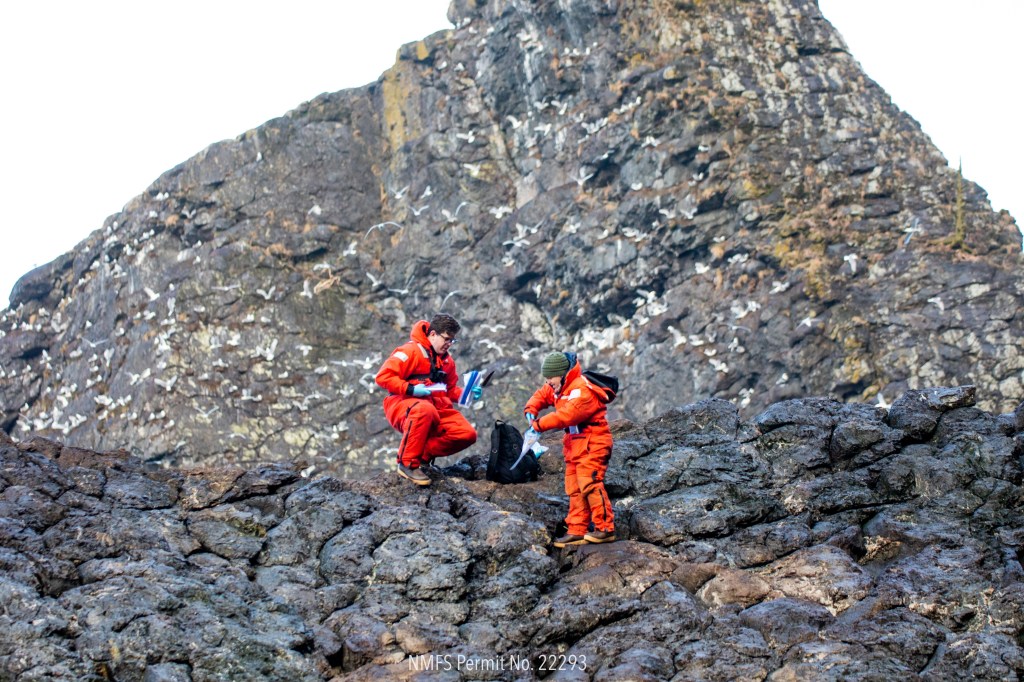
Chiswell Island Steller Research Team at the Alaska SeaLife Center collects scat samples from a rookery in Alaska to learn more about winter diets of this endangered species. 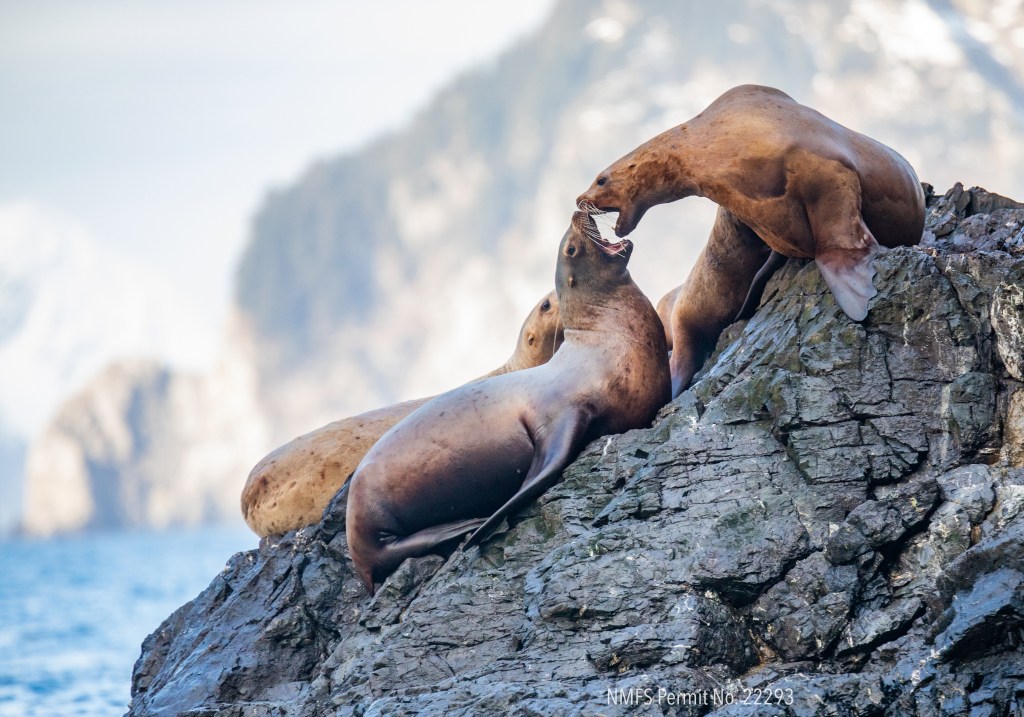
Steller sea lions in Alaska. 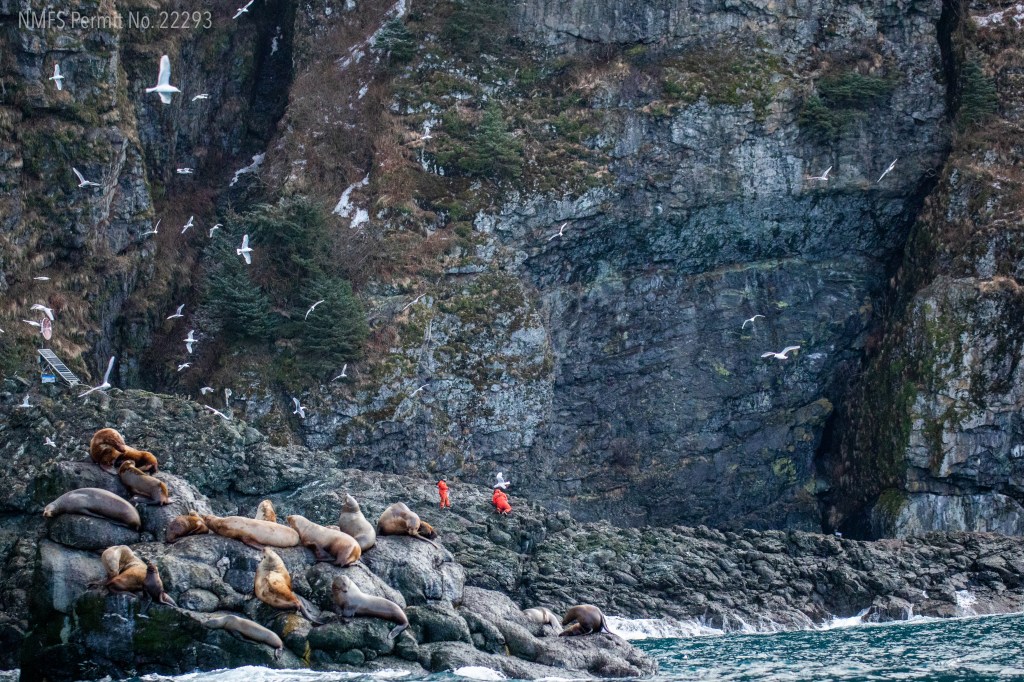
Chiswell Island Steller Research Team at the Alaska SeaLife Center collects scat samples from a rookery in Alaska to learn more about winter diets of this endangered species. 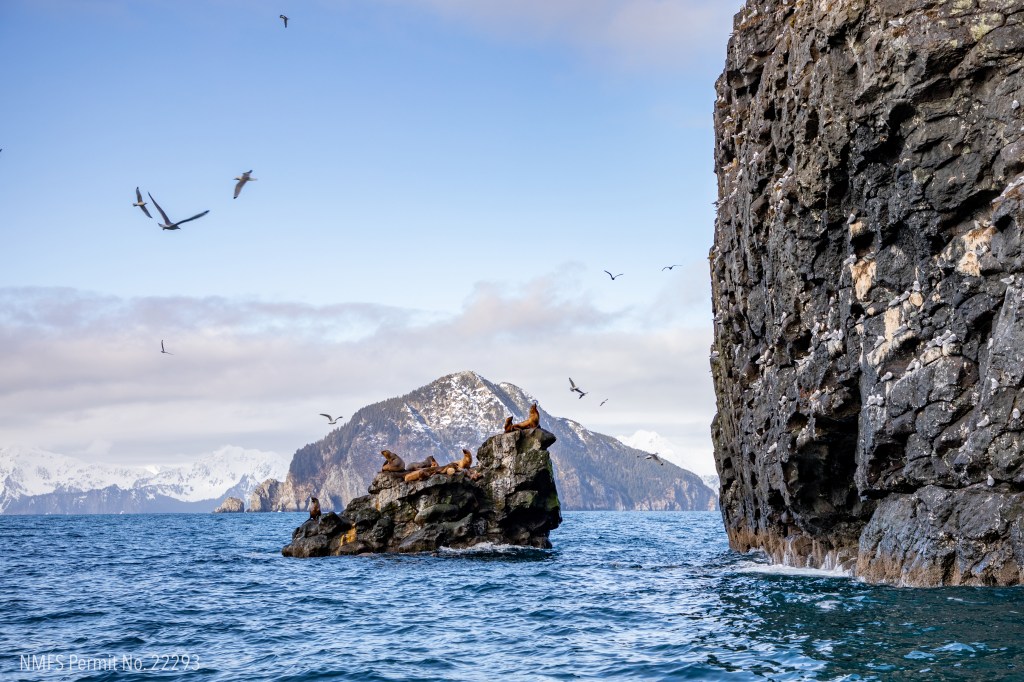
Steller sea lions in Alaska. 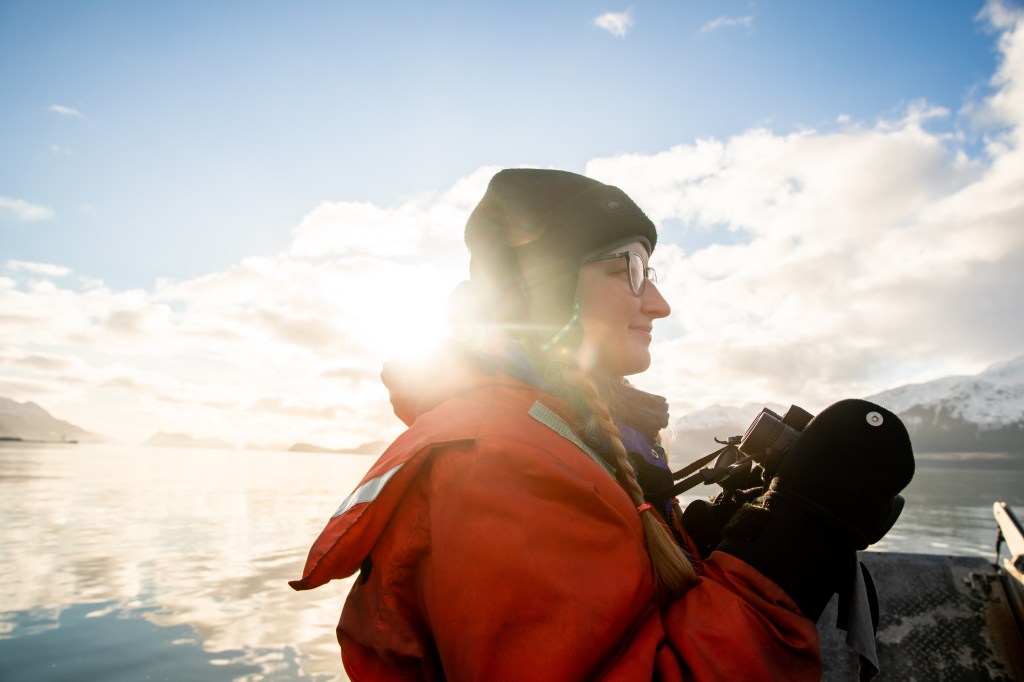
ASLC Seabird research Jenna counts birds during the center’s 20+ year seabird survey in Resurrection Bay. 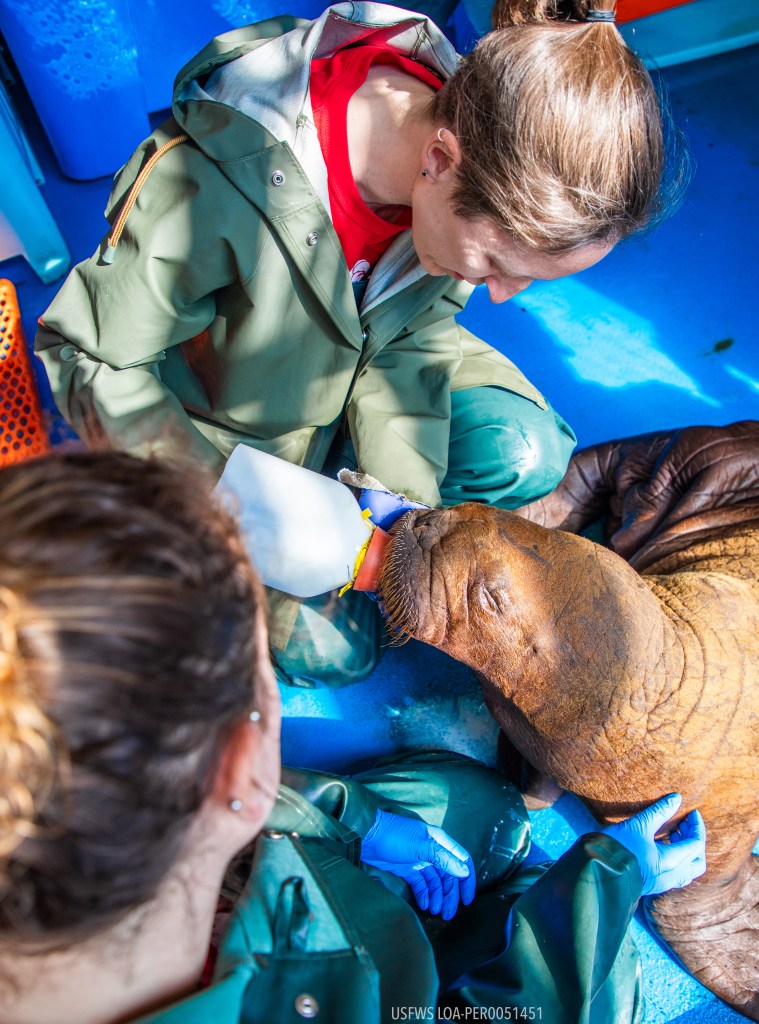
An orphaned pacific walrus calf is bottle fed by Halley (top) and Savannah (bottom) from ASLC’s wildlife response program. The calf was malnourished and found wandering on its own away from its herd in northern Alaska. Despite incredible veterinary care, the calf did not survive. 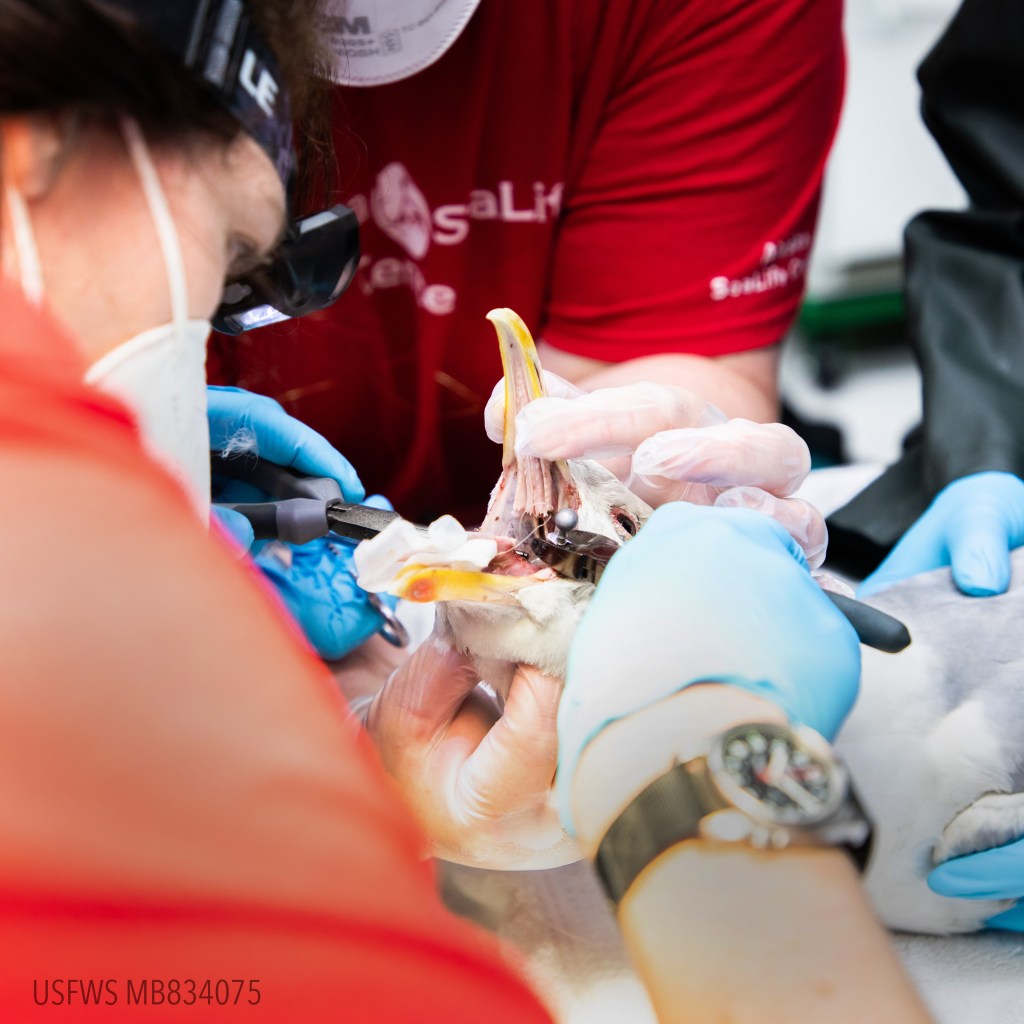
ASLC Veterinarian Dr. Emm removes a fishing hook from a gull after being admitted to the ASLC Wildlife Response Program. 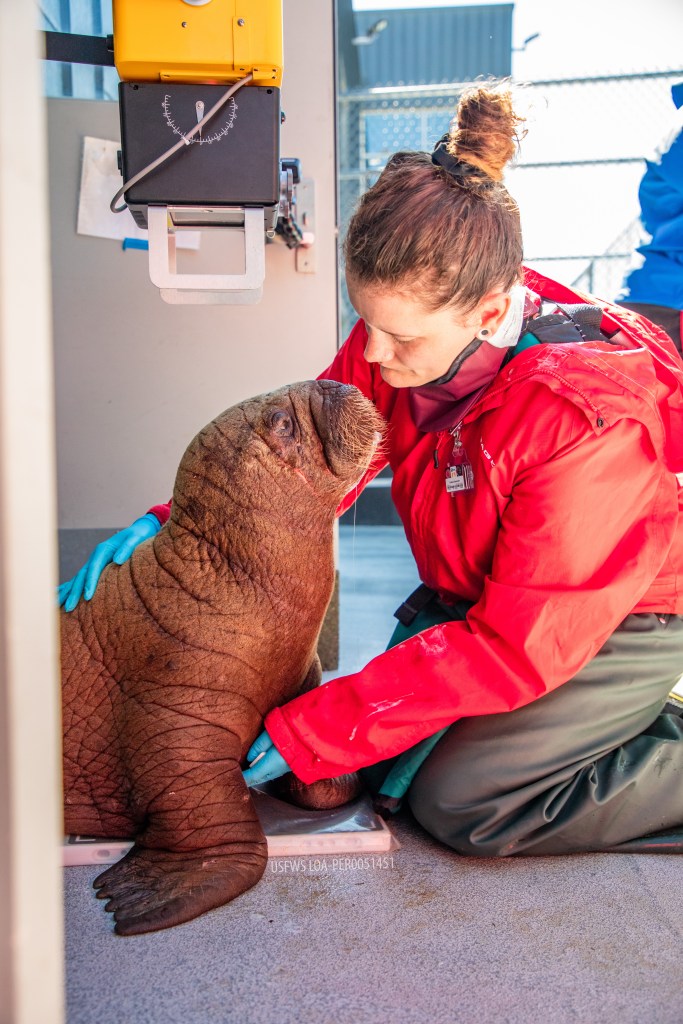
ASLC Animal Care Specialist Savannah gently encourages an orphaned walrus calf to position for a radiograph after being admitted to the ASLC wildlife response program. The calf was malnourished and found wandering on its own away from its herd in northern Alaska. Despite incredible veterinary care, the calf did not survive. 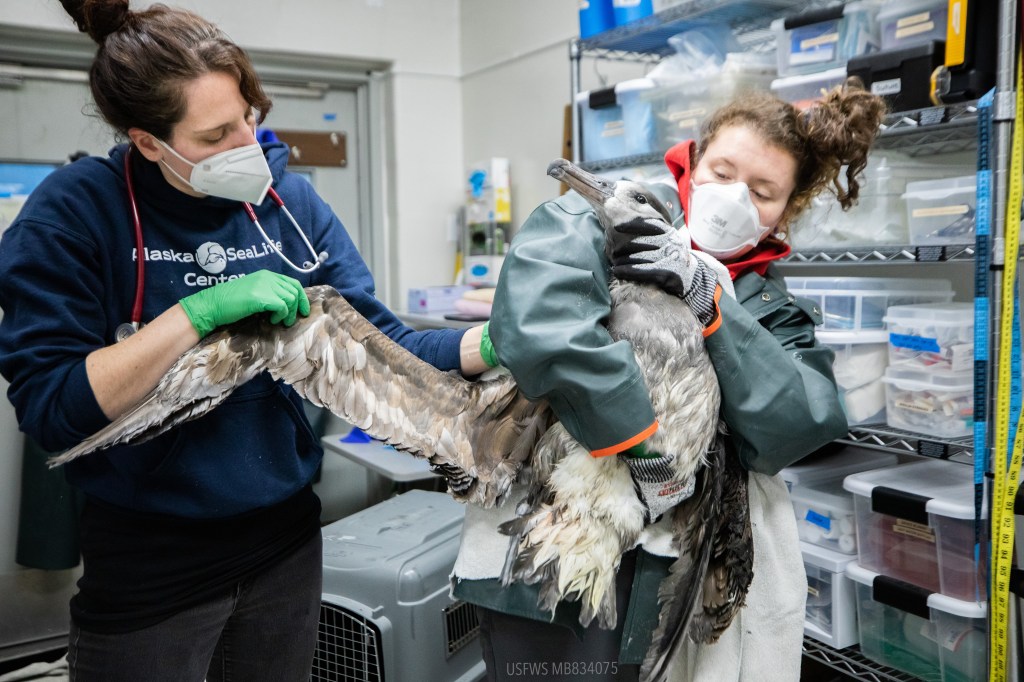
ASLC Veterinarian Dr. Emm examines the wing of an albatross that was found stowing away in the interior of a ship. The bird was found malnourished, dehydrated, and admitted to the wildlife response program. 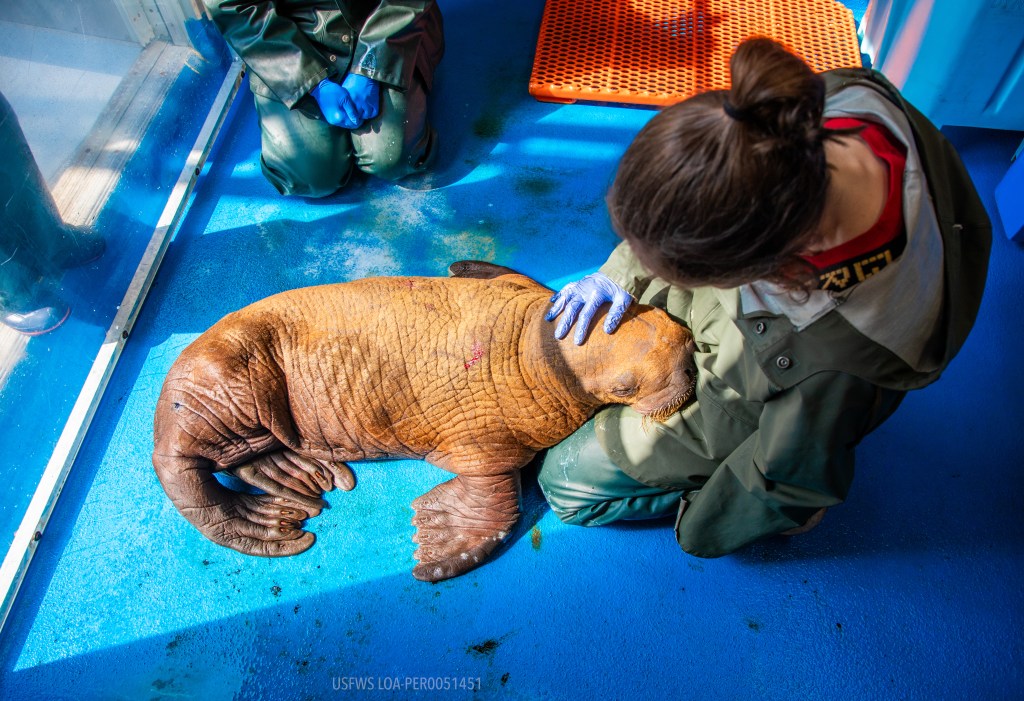
An orphaned pacific walrus calf rests his head in the lap of ASLC’s wildlife response care specialist Halley. The calf was malnourished and found wandering on its own away from its herd in northern Alaska. Despite incredible veterinary care, the calf did not survive. 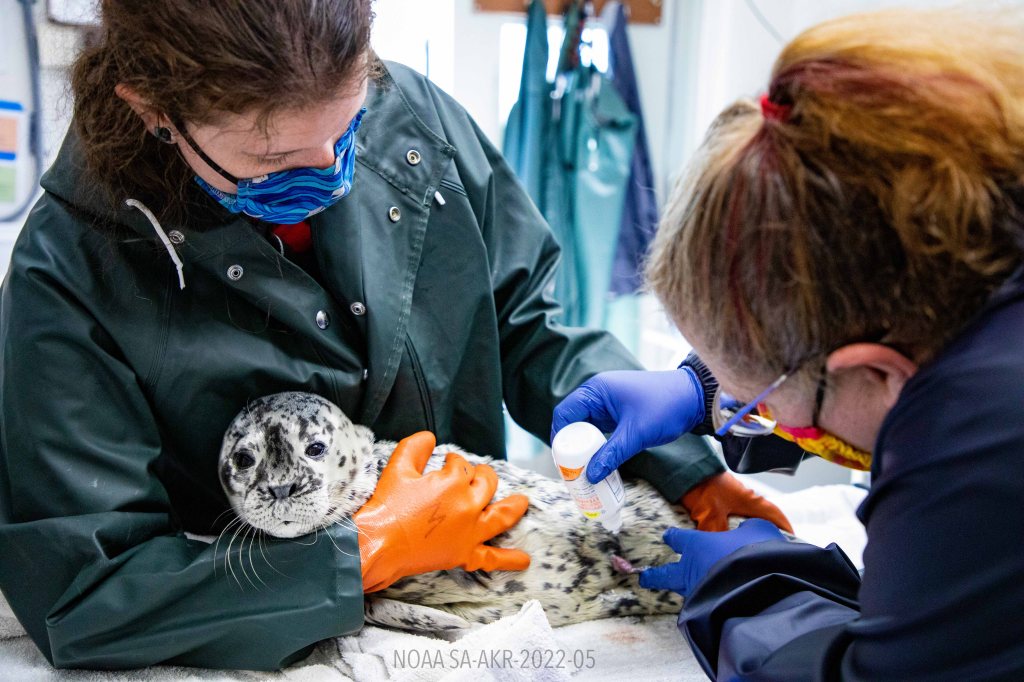
ASLC’s wildlife response team provides emergency veterinary care to an orphaned harbor seal during his admit exam. The ASLC Wildlife Response Program has admitted over 150 harbor seals in the program’s history, most of which were successfully rehabilitated and released. 
A female brown bear was tranquilized by scientists to have samples collected, be weighed and have a GPS collar placed on July 7, 2015. She woke a few hours after collaring and her behavior was reported as normal. 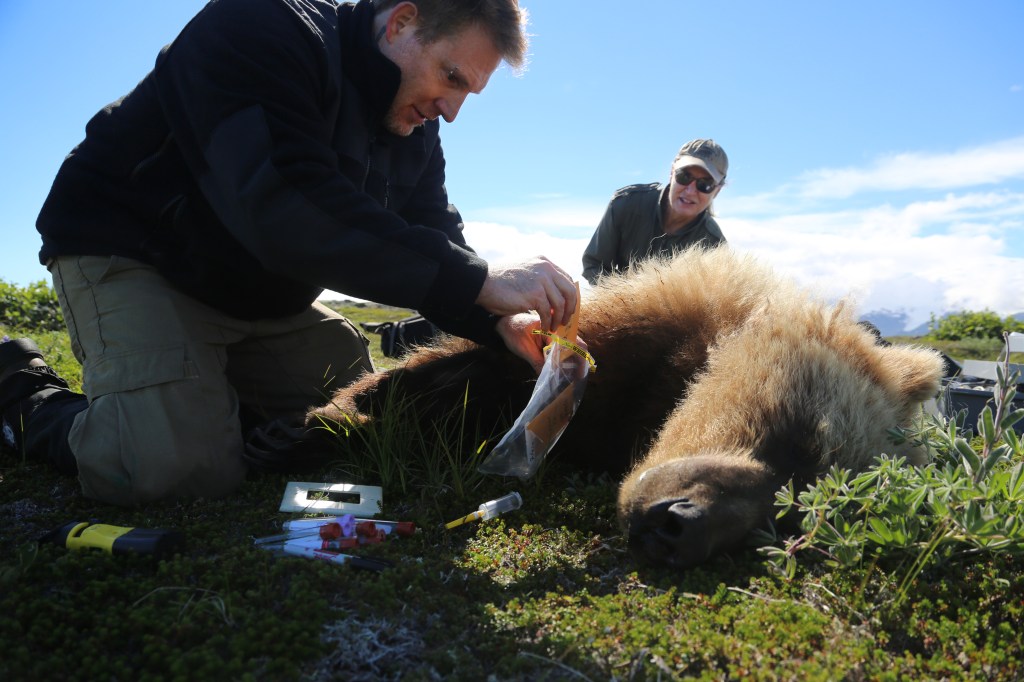
A female brown bear was tranquilized by scientists to have samples collected, be weighed and have a GPS collar placed on July 7, 2015. She woke a few hours after collaring and her behavior was reported as normal. 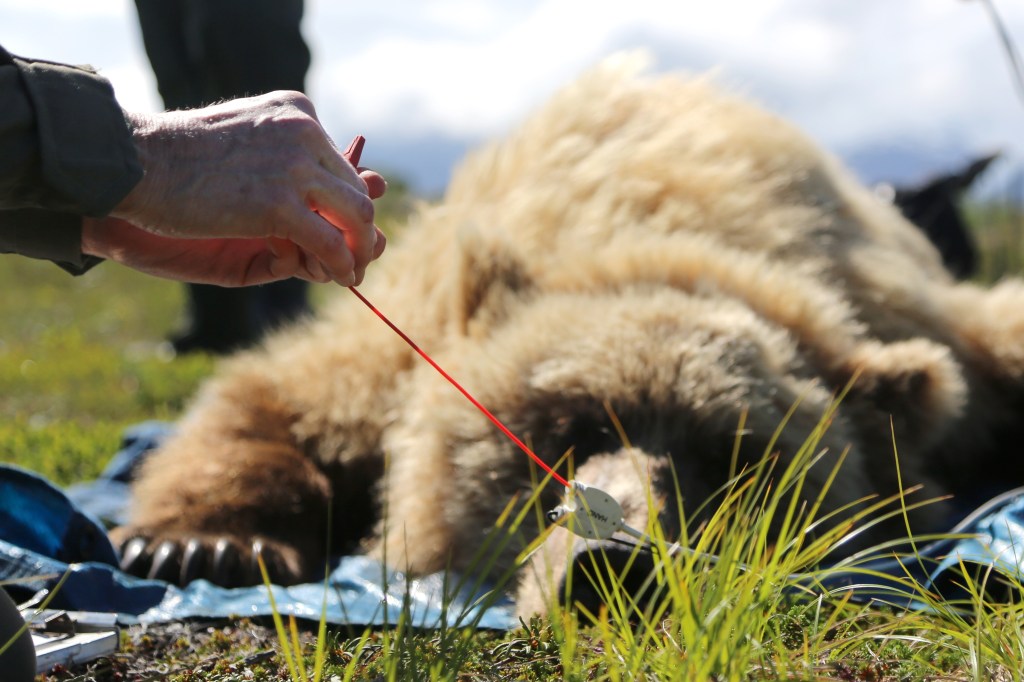
Grant Hilderbrand, a National Park Wildlife biologist for the Alaska Region, monitors vitals of a tranquilized brown bear. Scientists collected samples, weighed, and placed a GPS collar on the bear on July 7, 2015. The bear woke a few hours after collaring and her behavior was reported as normal. 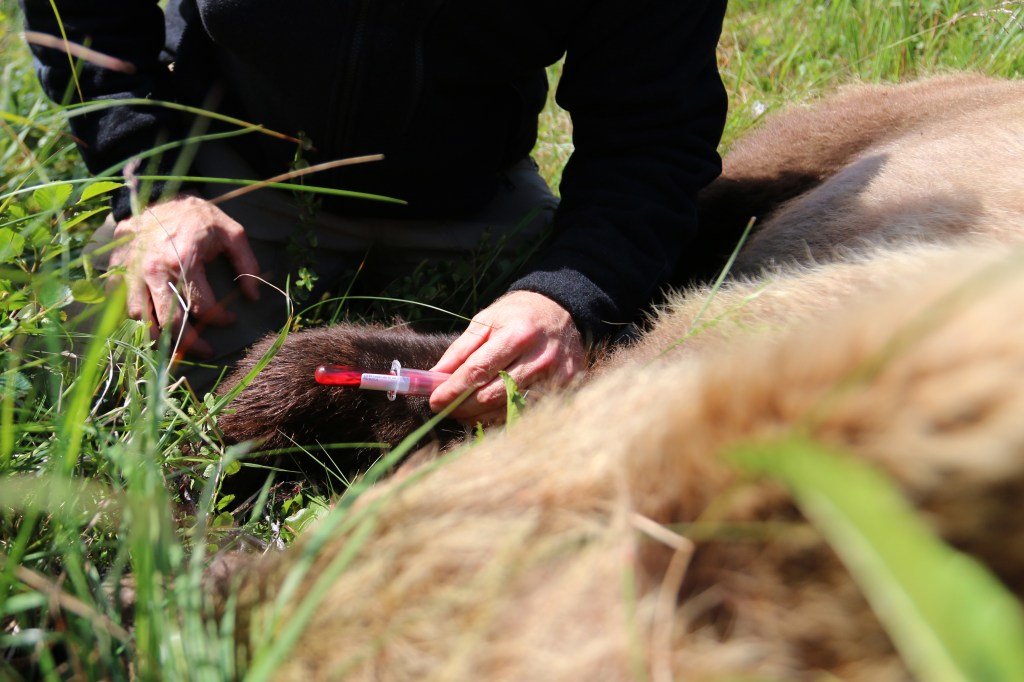
Grant Hilderbrand, a National Park Wildlife biologist for the Alaska Region, draws blood from a tranquilized brown bear. The blood will be analyzed in the lab to collect more information about the bear’s diet by tracing isotopes. (July 7, 2015). 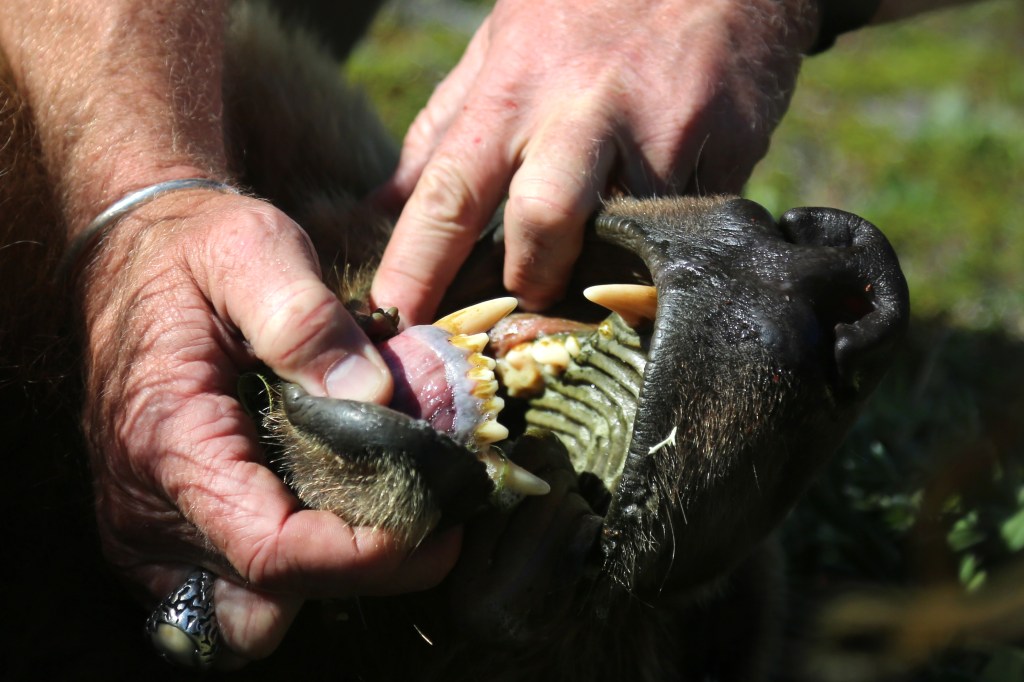
Grant Hilderbrand, a National Park Wildlife biologist for the Alaska Region, checks the teeth of a tranquilized brown bear near Katmai National Park. Scientists collected samples, weighed, and placed a GPS collar on the bear on July 7, 2015. The bear woke a few hours after collaring and her behavior was reported as normal. 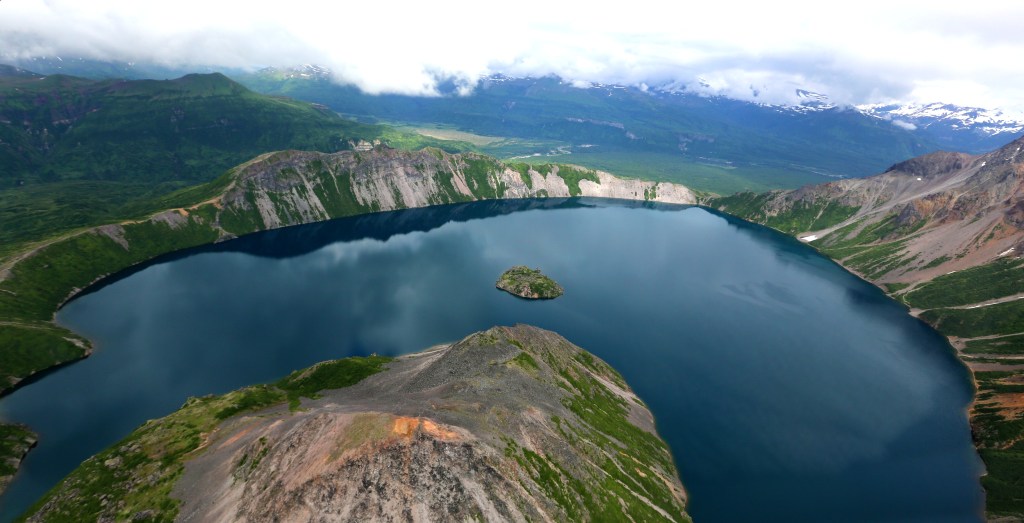
An aerial view of a crater lake that sits on top of Mount Kaguyak, a stratovolcano on the northeastern part of Katmai National Park & Preserve on July 9, 2015. 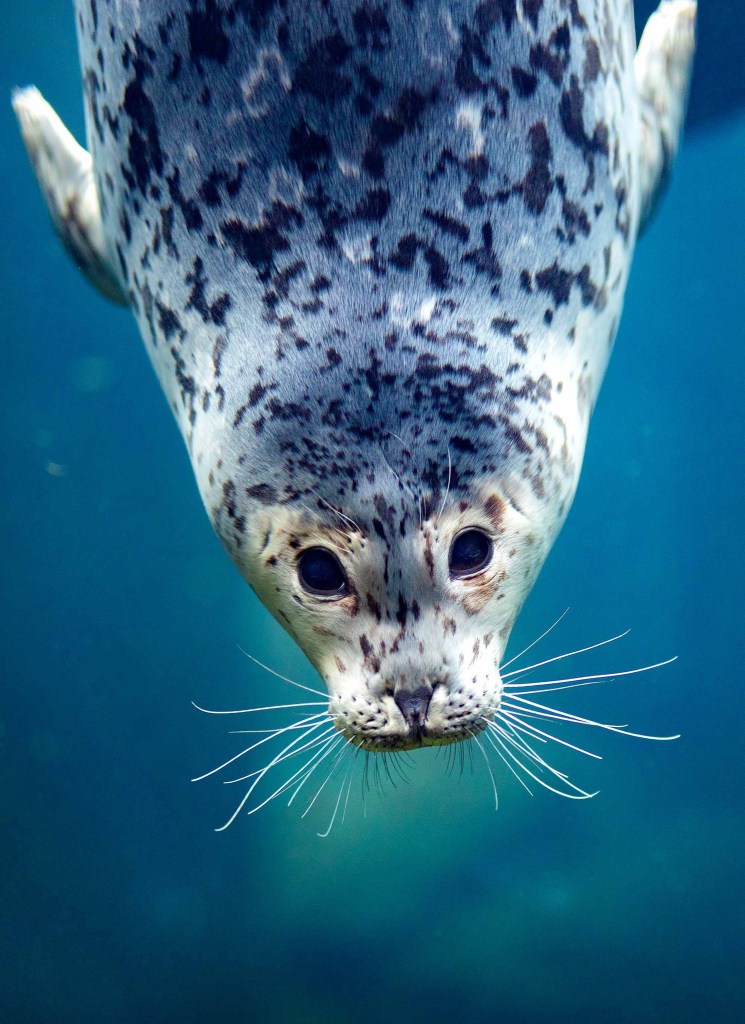
2023 Honorable Mention Association of Zoos and Aquariums Photo Contest Little Tuq the harbor seal has come such a long way in his journey! 💙 This harbor seal pup was in bad shape when he arrived to the Alaska SeaLife Center as a patient in our Wildlife Response Program this past summer. Tuq had significant neurological damage that we weren’t sure he’d make it through. After many months of expert care from the wildlife response team, this cute little guy pulled through. We found out he was not a release candidate due to neurological issues that cause his head to wobble, but he’s having a blast with his new seal buds here at the Alaska SeaLife Center! He’ll continue to receive the special care he needs here at the Center. 
Honorable Mention in the 2018 AZA Nation Wide Photo Competition 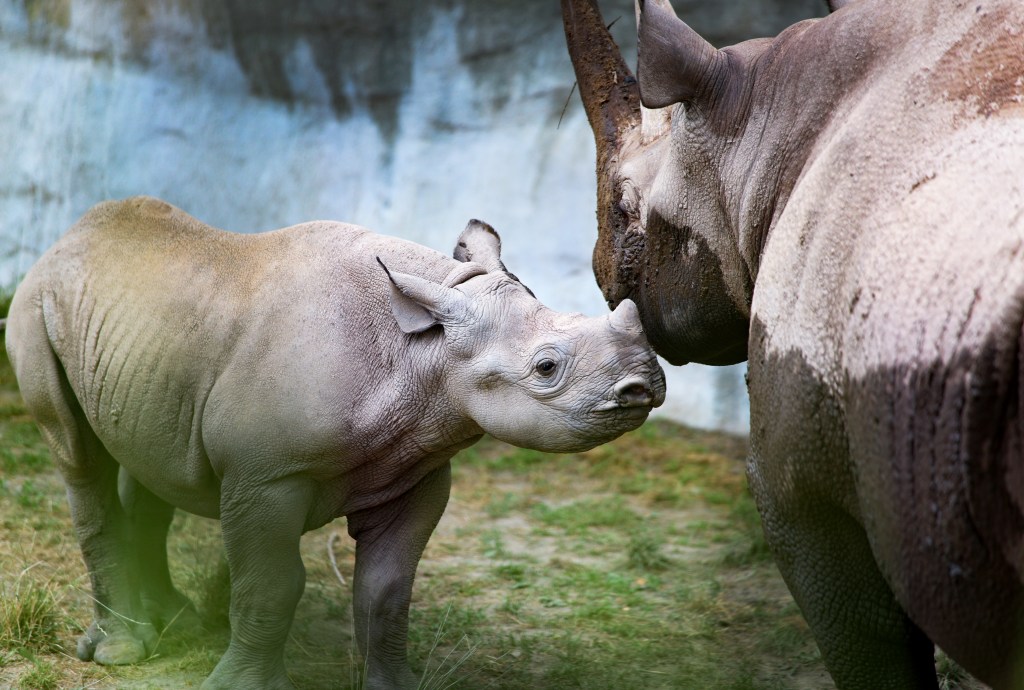
The zoo’s resident black rhinos, Doppsee and Phineus, were introduced on Oct. 30, 2017 for the first time in the hope that they breed. In the wilds of Africa, black rhino are a solitary species that only come together to mate. Female rhinos become receptive to breeding only once a month, so when the male and female initially meet there is a lot of aggression. The male has to convince the female that he is a worthy choice as a mate. He does this through posturing, foot dragging, urine spraying, sparring, and chasing. While it may seem a little rough to us, rhinos are built for such encounters. Their thick hide and heavy skull help protect them during these necessary pre-breeding displays. 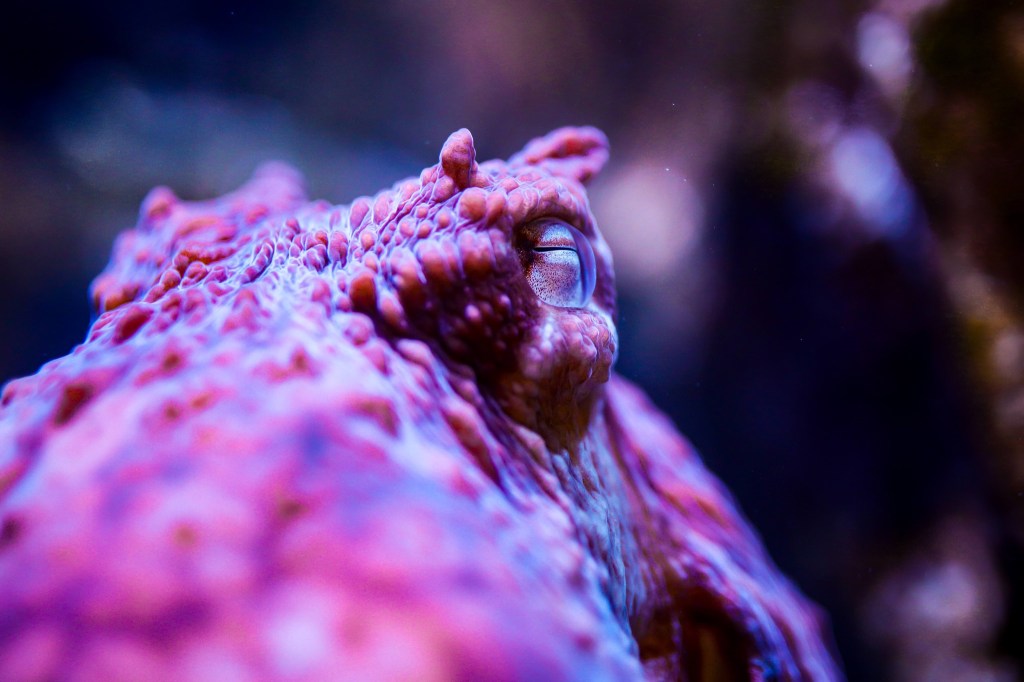
2022 Honorable Mentions – Association of Zoos and Aquariums photo contest Fun Fact! Octopus eyes have only one kind of photoreceptor, implying that they can only see in black and white. But octopus have brilliantly colored skin and are masters of camouflage, which leads scientists to believe that they may not be colorblind. Some scientists believe these creatures can also see with their skin and others believe that their U-shaped pupils allow them to use chromatic aberration to interpret color. There’s so much to learn about this incredible animal! 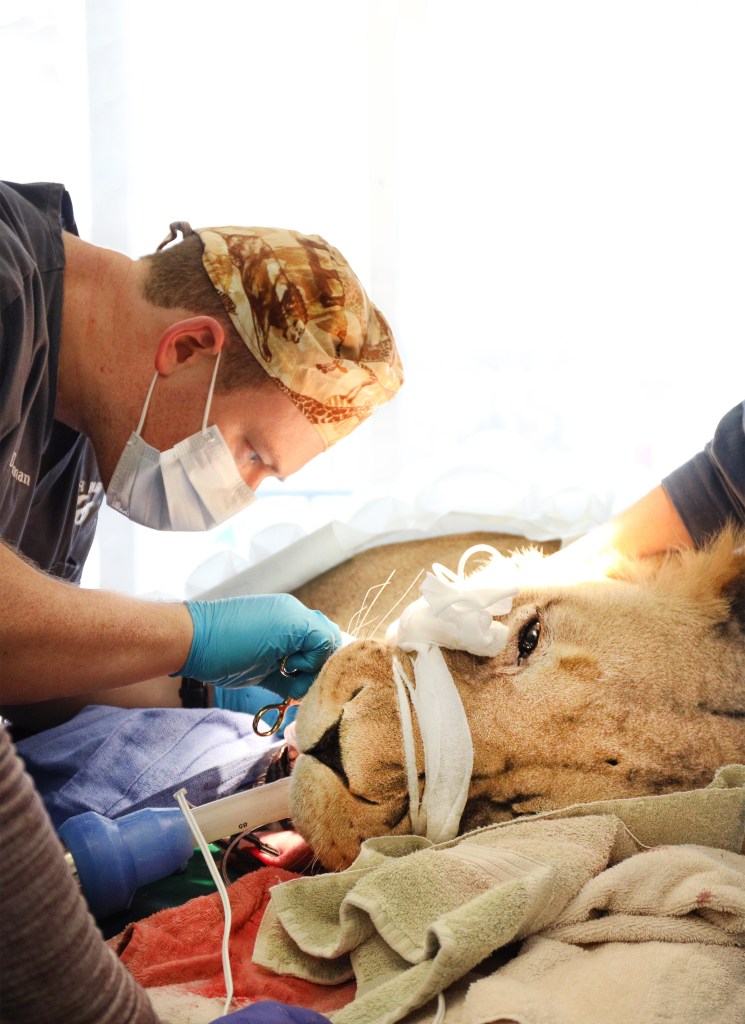
Dr. Potter Park Zoo’s Director of Animal Health operated on Ulana the lioness. The lion needed a root canal, and recovered quickly from the procedure and is doing well. 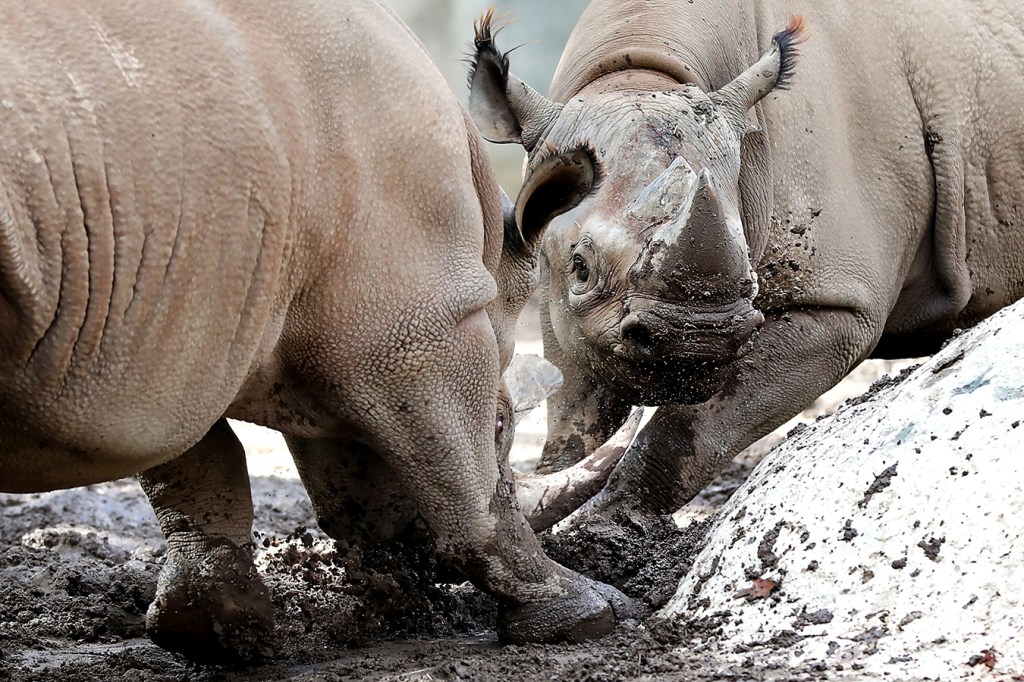
The zoo’s resident black rhinos, Doppsee and Phineus, were introduced on Oct. 30, 2017 for the first time in the hope that they breed. In the wilds of Africa, black rhino are a solitary species that only come together to mate. Female rhinos become receptive to breeding only once a month, so when the male and female initially meet there is a lot of aggression. The male has to convince the female that he is a worthy choice as a mate. He does this through posturing, foot dragging, urine spraying, sparring, and chasing. While it may seem a little rough to us, rhinos are built for such encounters. Their thick hide and heavy skull help protect them during these necessary pre-breeding displays. 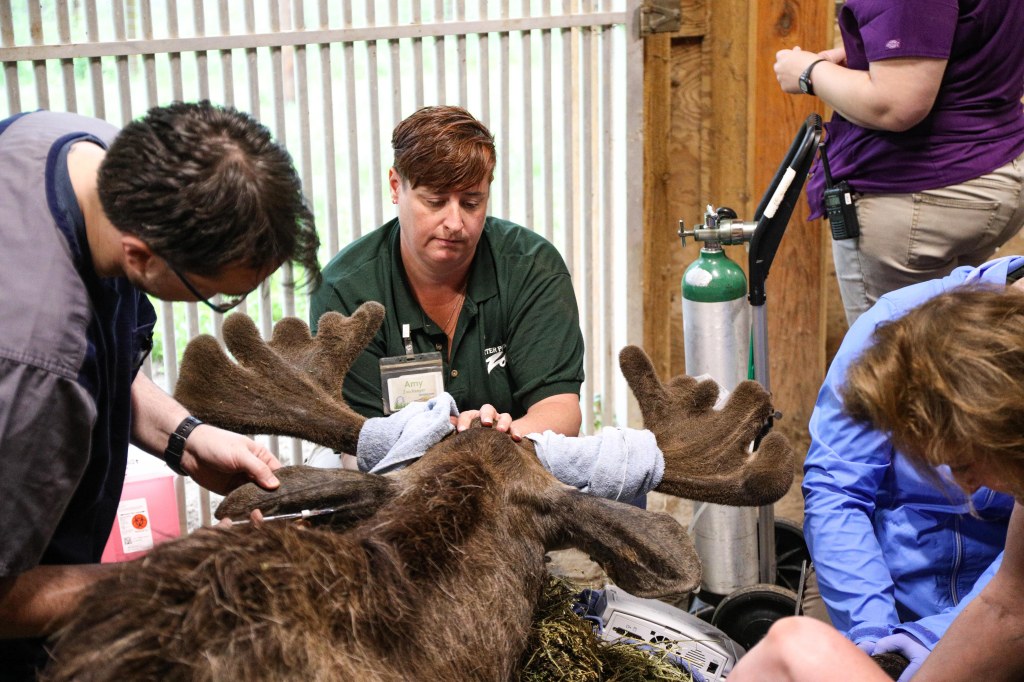
Potter Park Zookeeper Amy supports Meeko the moose’s head during a procedure to treat cancer. The zoo collaborated with MSU Veterinary College of Medicine to give Meeko a cutting edge cancer treatment called electroshock therapy. The first treatment seemed to help, but sadly Meeko passed away a month later. 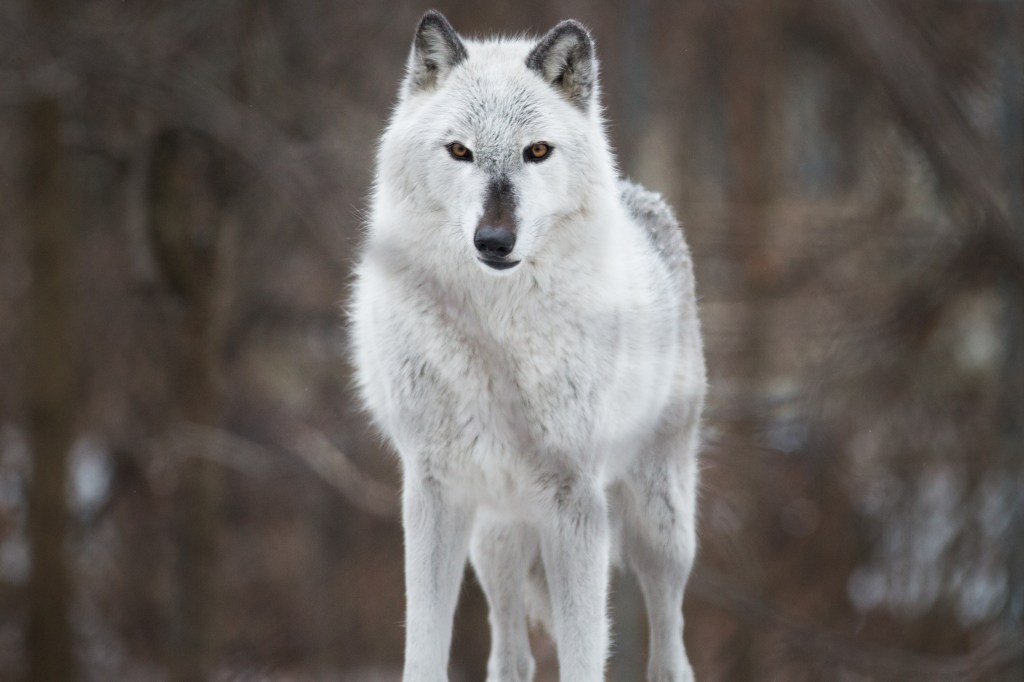
A female gray wolf observes her exhibit when the two males she shares it with sleep. Wolves live and hunt in packs, allowing them to take on larger prey, and they have very large feet with some webbing between the toes, which helps them run on snowy surfaces. 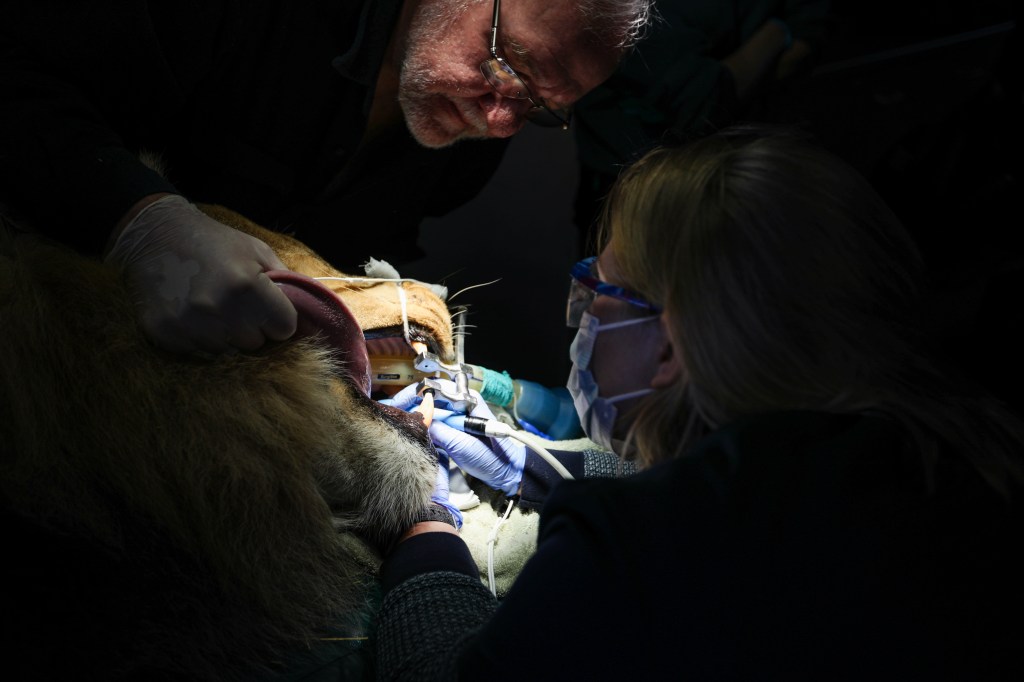
Dr. Jim Sikarskie and a veterinary technician work on cleaning Kota the male African lion’s teeth during his annual physical. Dental care is extremely important for preventative care. Every animal at Potter Park Zoo gets dental care during their physicals. 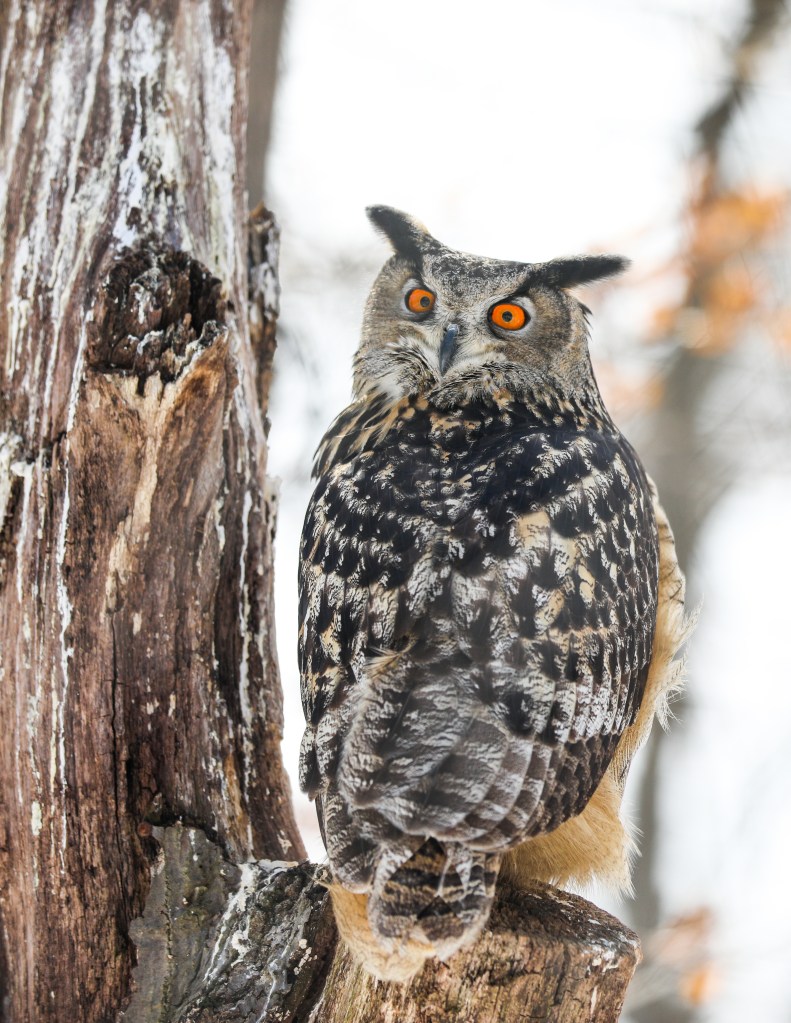
Three Eurasian eagle owls call Potter Park Zoo their home. The Eurasian eagle owl is the largest species of owl. 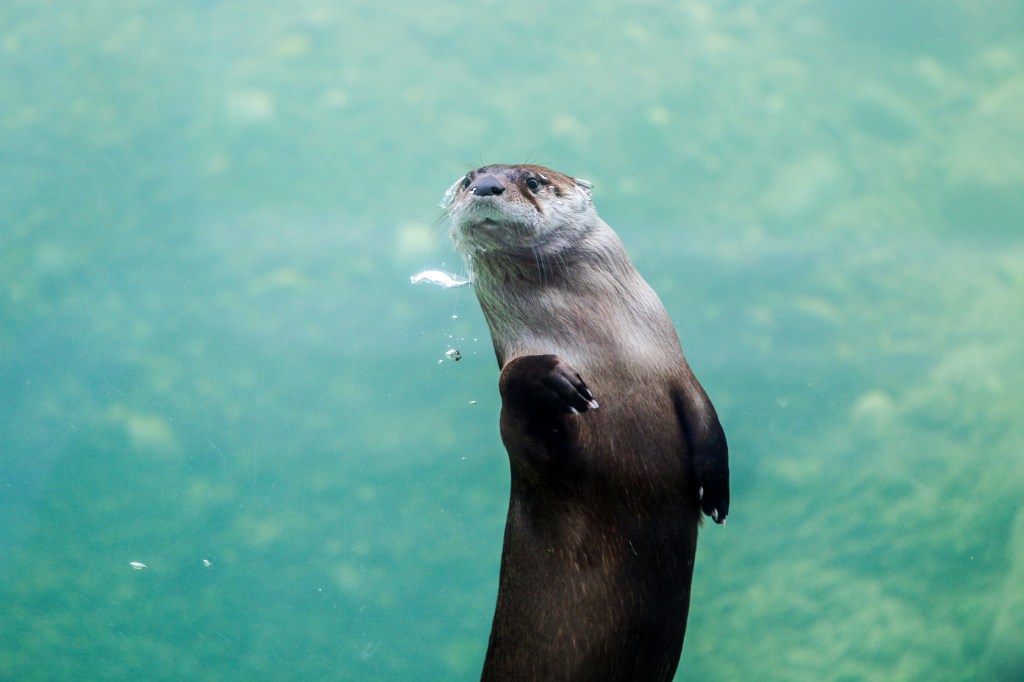
Nkeke the North American river otter gazes at a child through her habitat at Potter Park Zoo. Nkeke became a mother in 2018, giving birth to two healthy pups. 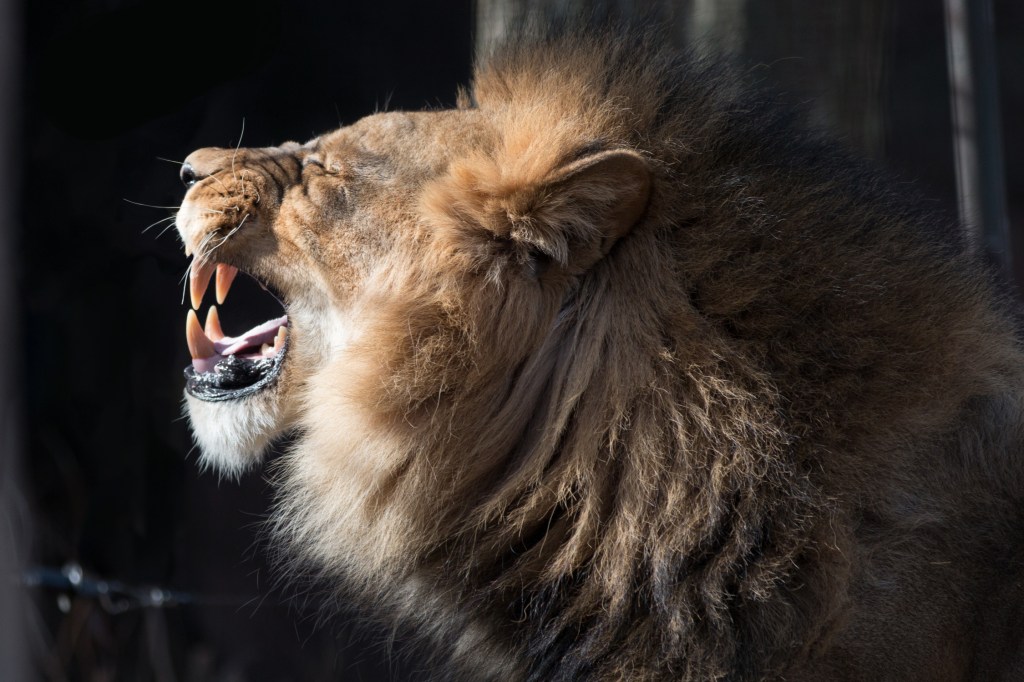
Dakota, a male African lion at Potter Park Zoo, roars to communicate with females. Lions are very social animals that live in prides of 4 and 37 cats. At the core of the pride are 4 to 12 related adult females, their young, and 1-6 adult males. 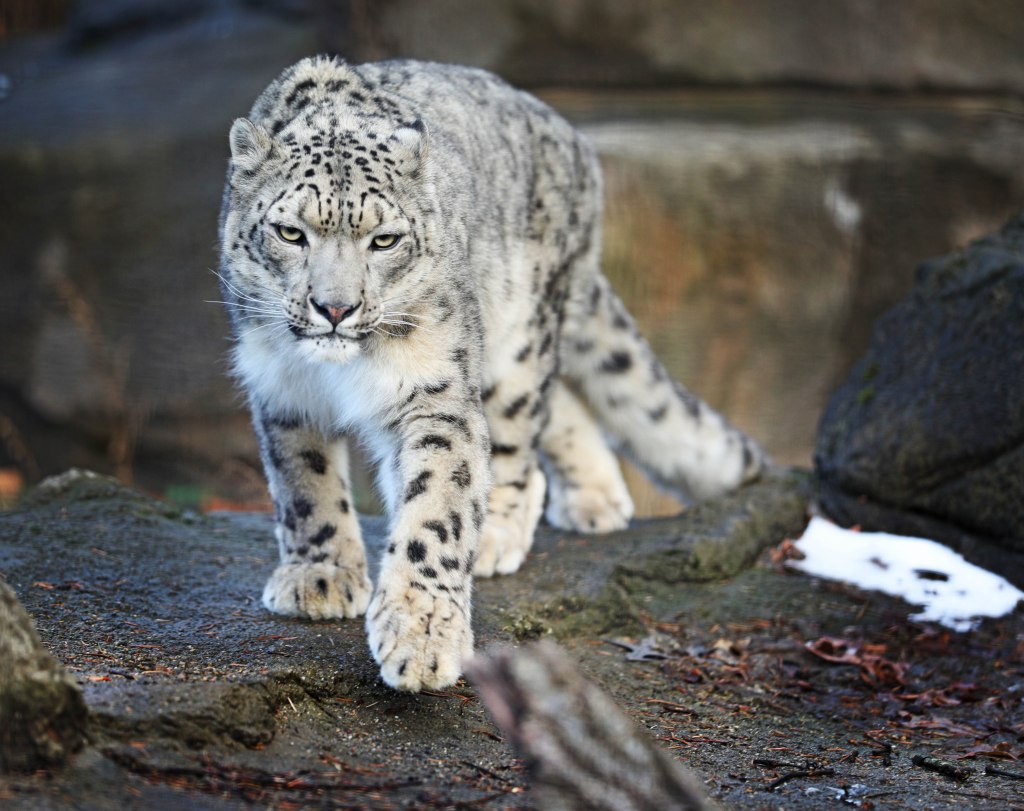
Snow Leopard | Potter Park Zoo 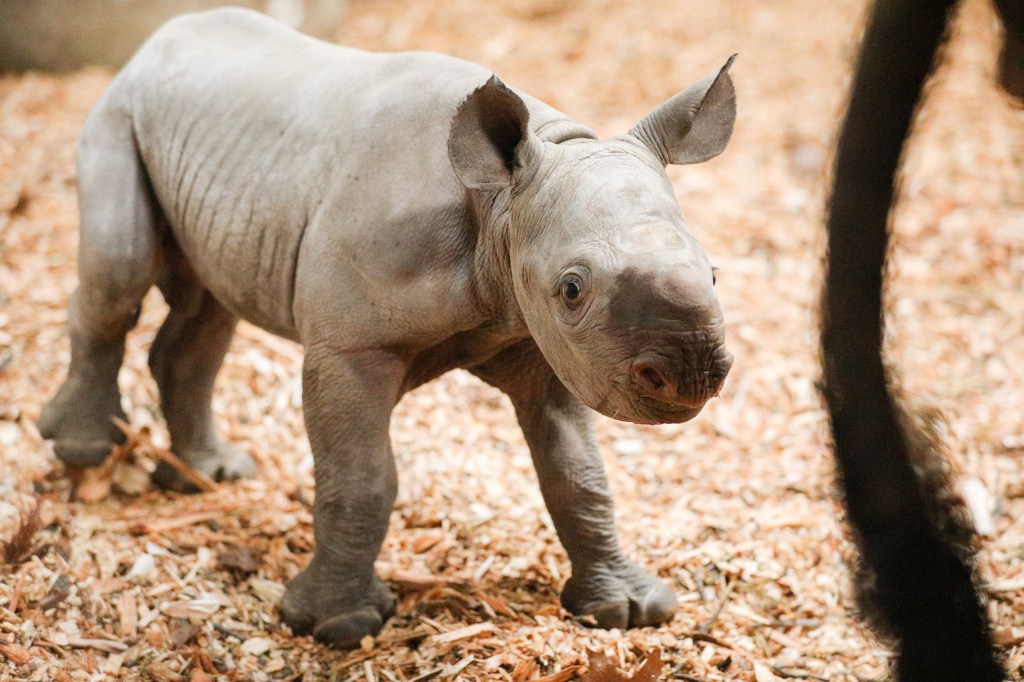
The zoo’s resident black rhinos, Doppsee and Phineus, were introduced on Oct. 30, 2017 for the first time in the hope that they breed. In the wilds of Africa, black rhino are a solitary species that only come together to mate. Female rhinos become receptive to breeding only once a month, so when the male and female initially meet there is a lot of aggression. The male has to convince the female that he is a worthy choice as a mate. He does this through posturing, foot dragging, urine spraying, sparring, and chasing. While it may seem a little rough to us, rhinos are built for such encounters. Their thick hide and heavy skull help protect them during these necessary pre-breeding displays. 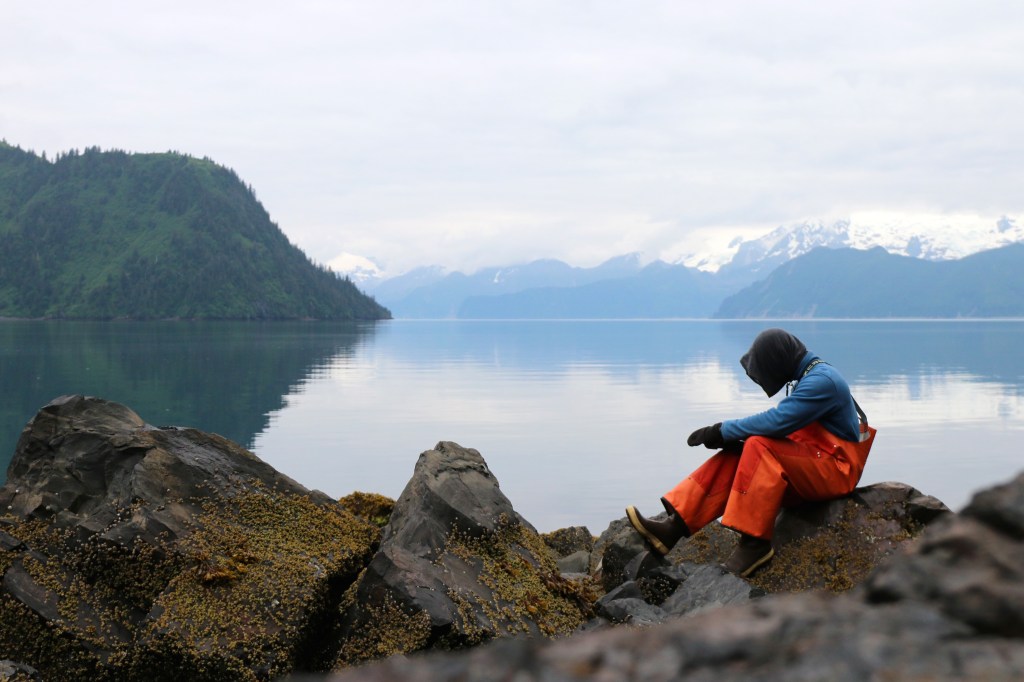
John collects algae distribution data on a Rocky intertidal shore in Kenai Fjords National Park on Saturday, June 10, 2015. 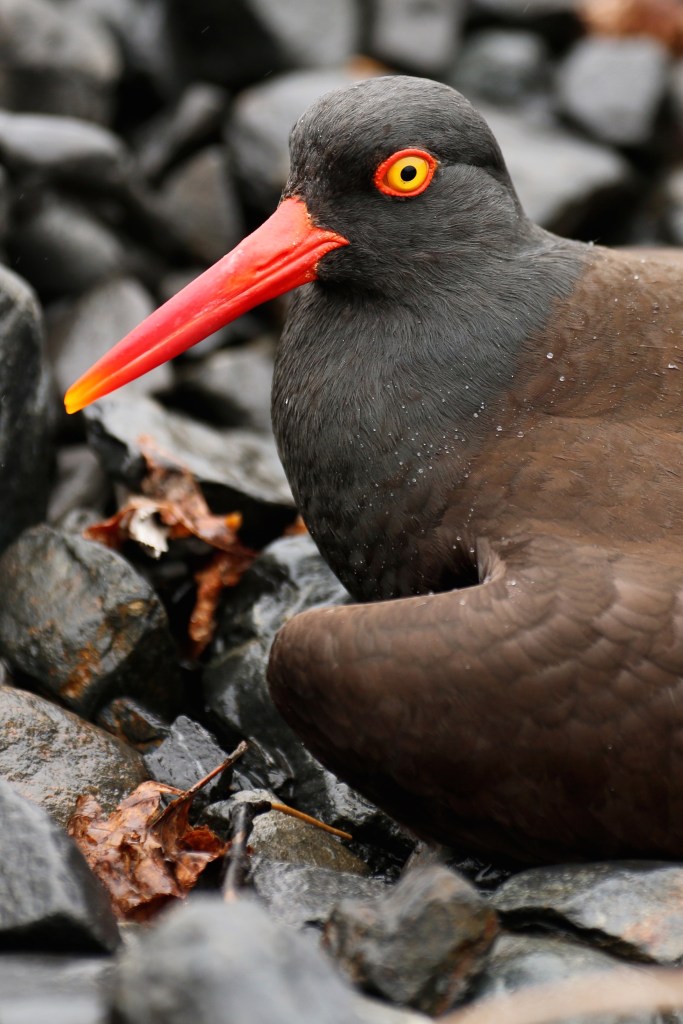
Black Oyster Catcher. Kenai Fjords National Park, 2015. 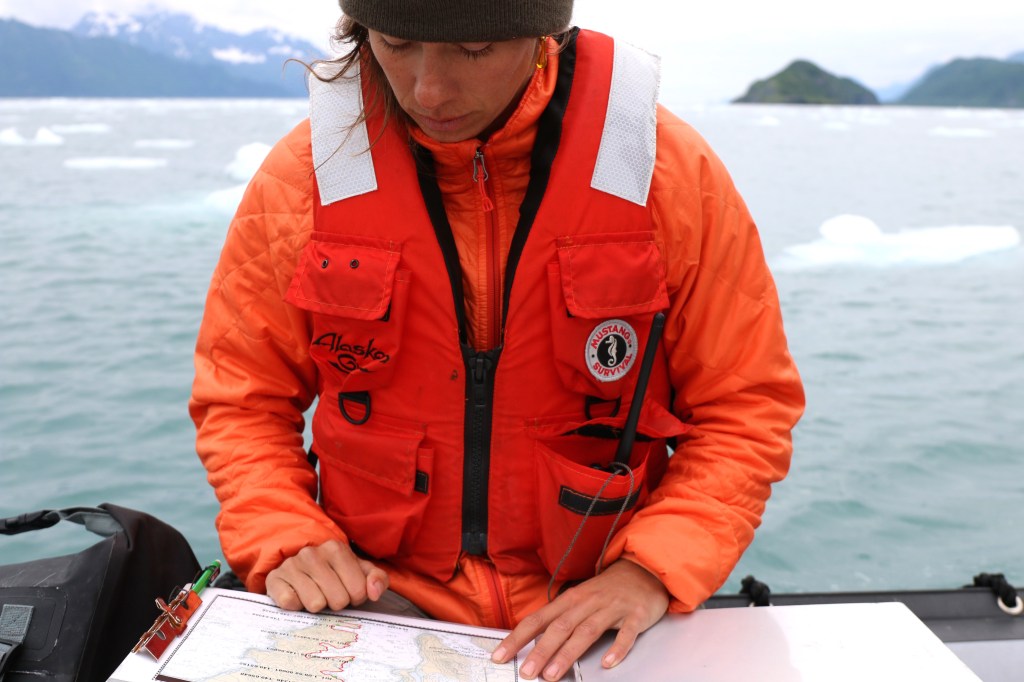
Elisa Weiss looks at data of past nest locations of Black Oyster Catchers in Kenai Fjords National Park. Elisa is a biologist from Hawaii participating in the Inventory and Monitoring Near Shore Project in the Alaska region, which aims to collect yearly data from a variety of near shore ecosystems through out Alaska. 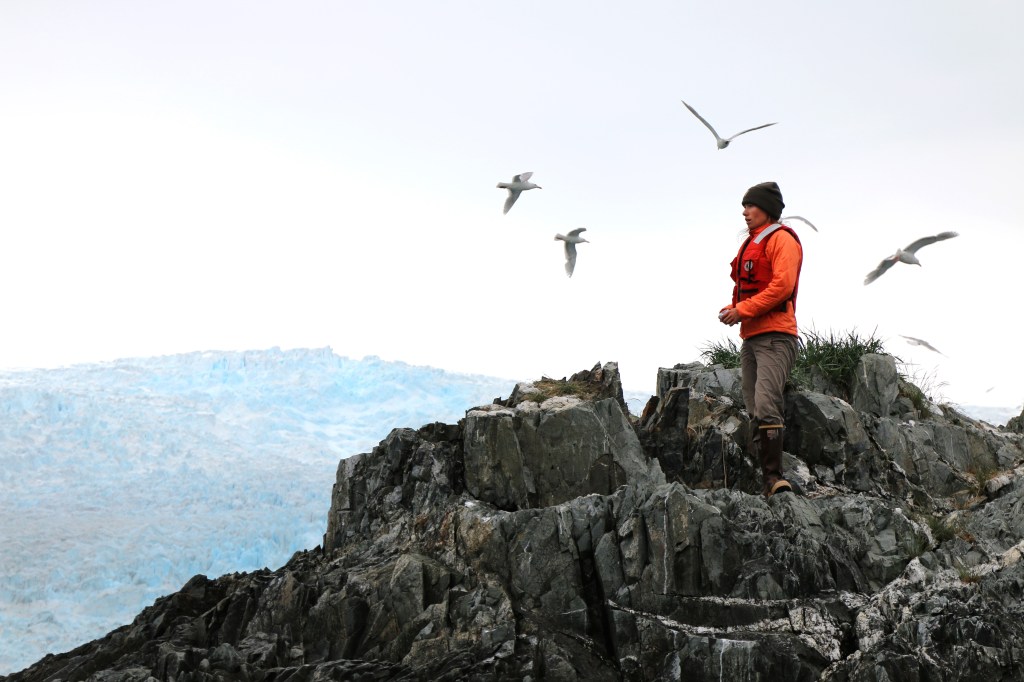
Elisa Weiss scans Squab Island for a nest of Black Oyster Catchers in Kenai Fjords National Park.Elisa is a biologist from Hawaii participating in the Inventory and Monitoring Near Shore Project in the Alaska region, which aims to collect yearly data from a variety of near shore ecosystems through out Alaska. 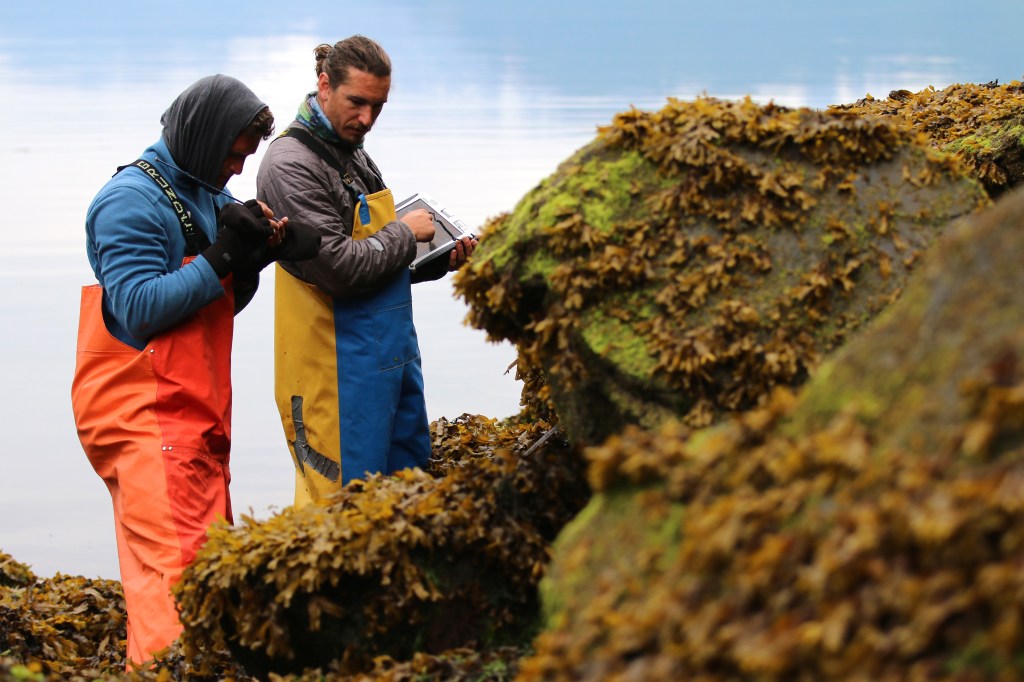
Benjamin and John Collect algae distribution data on a Rocky intertidal shore in Kenai Fjords National Park on Saturday, June 10, 2015. 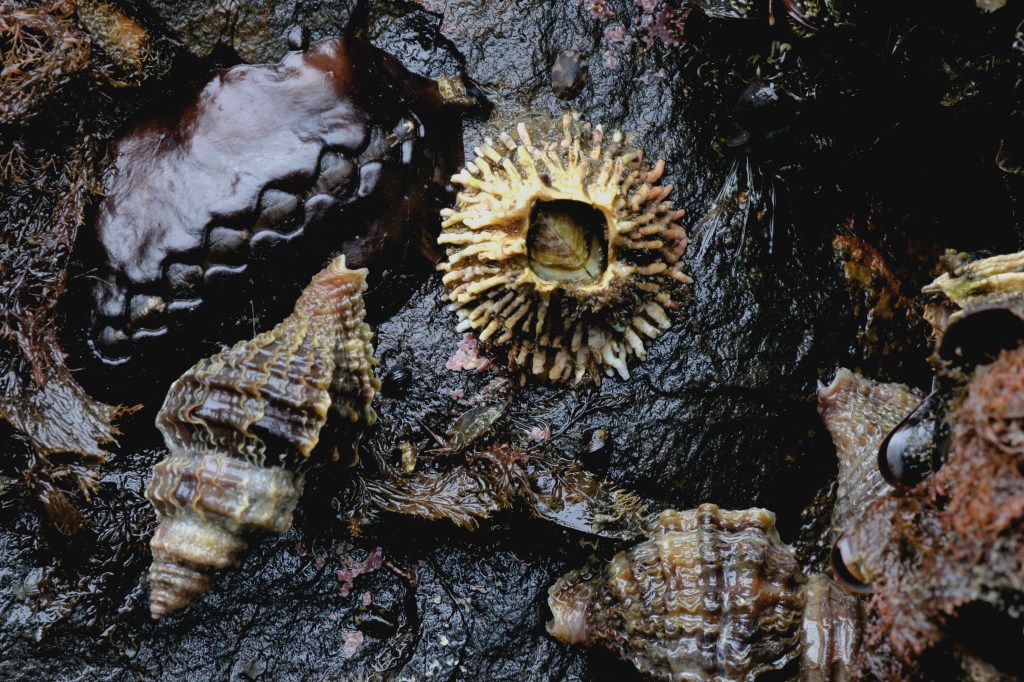
More life of the rock intertidal on Saturday, June 20, 2015. 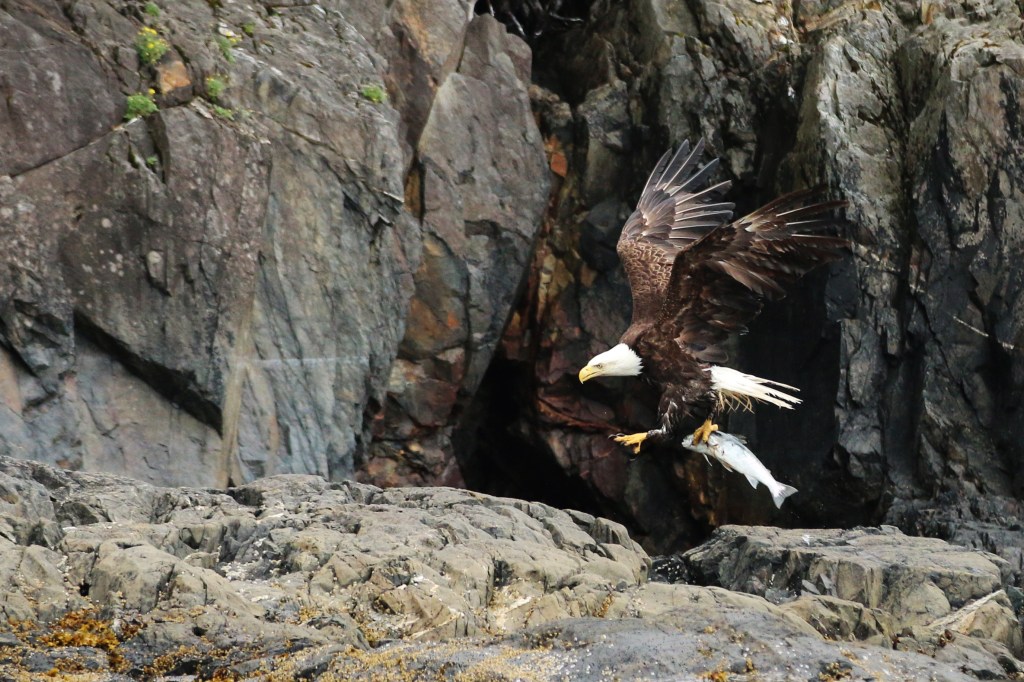
A Bald eagle transports it’s silver salmon kill in Aialik Bay, Kenai Fjords National Park on Saturday, June 20, 2015. 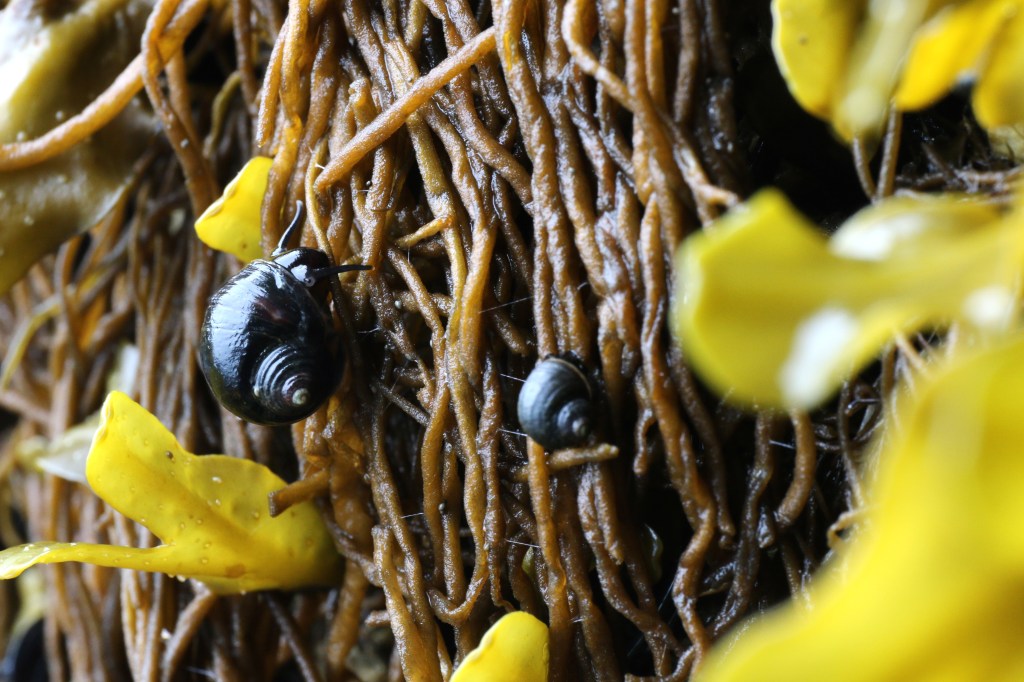
A small snail slowly moves on a Rock in it’s intertidal ecosystem on Saturday, June 20, 2015. 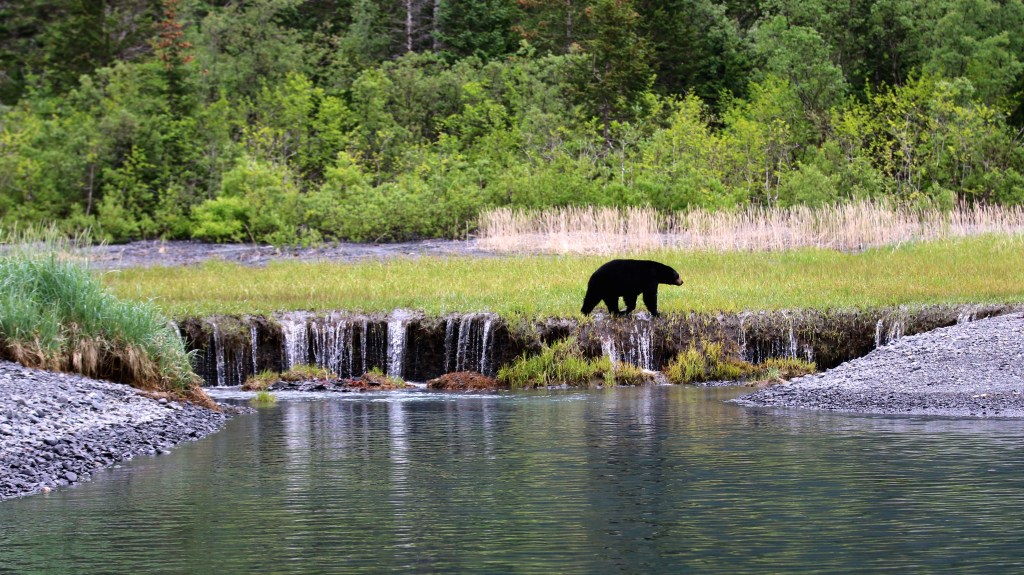
A black bear crosses over a waterfall in Kenai Fjords National Park on June 19, 2015. 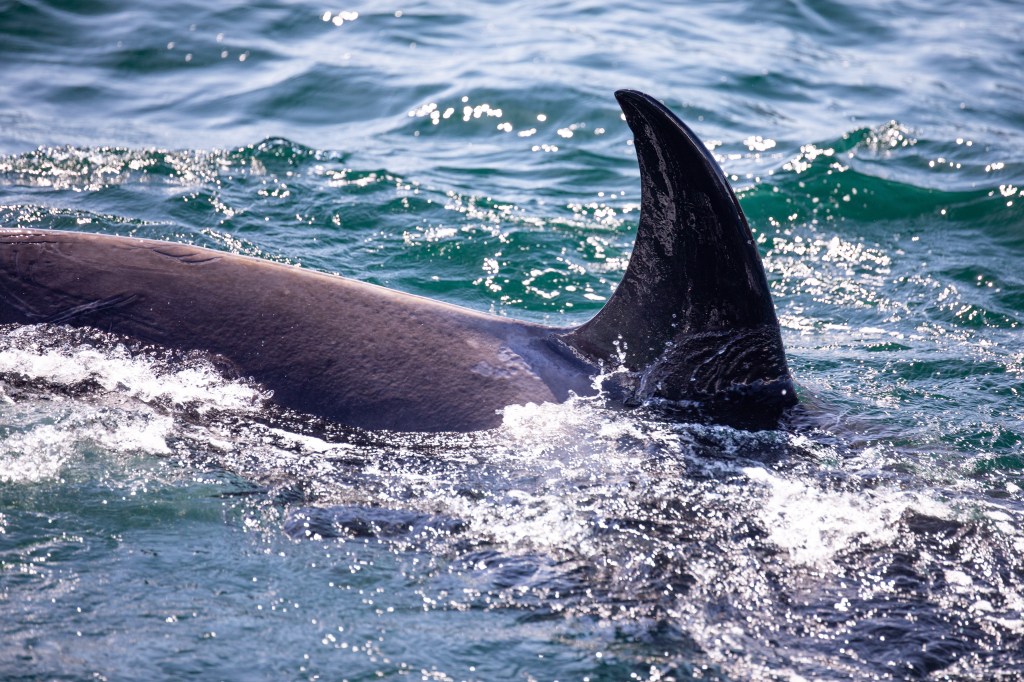
Wild orcas in Alaska 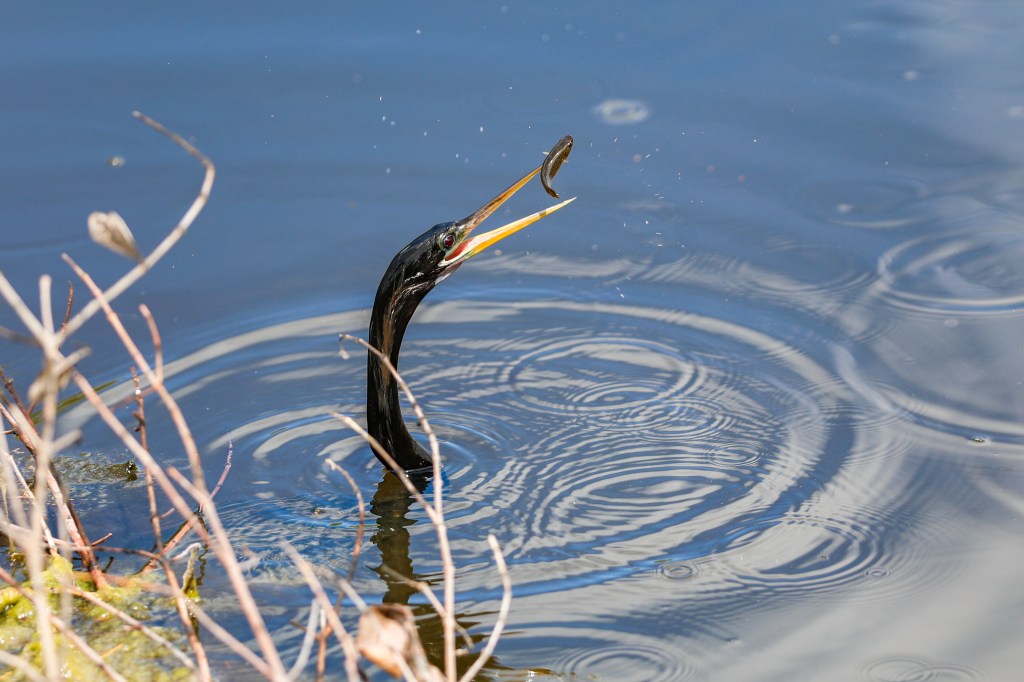
A male anhinga hunts for fish in the water at Merrit Island National Wildlife Refuge. Anhingas are wonderful hunters who dive under the water to catch fish. 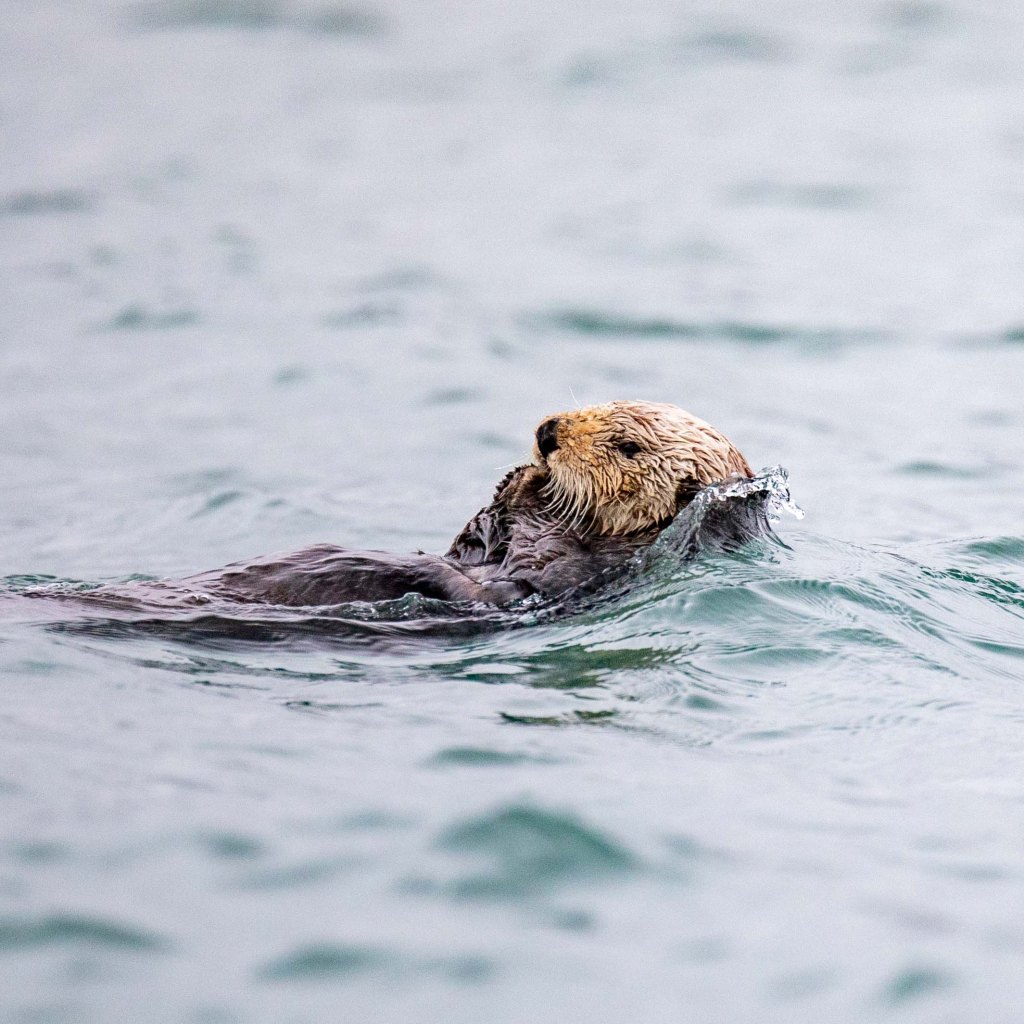
Wild northern Sea Otter in Alaska 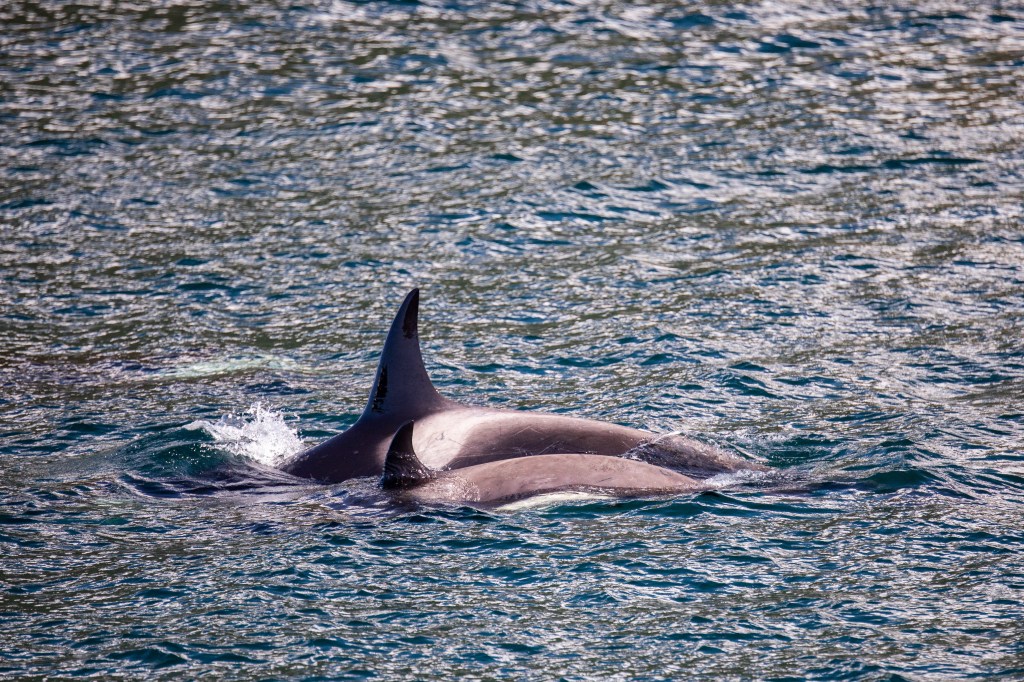
Wild orcas in Alaska 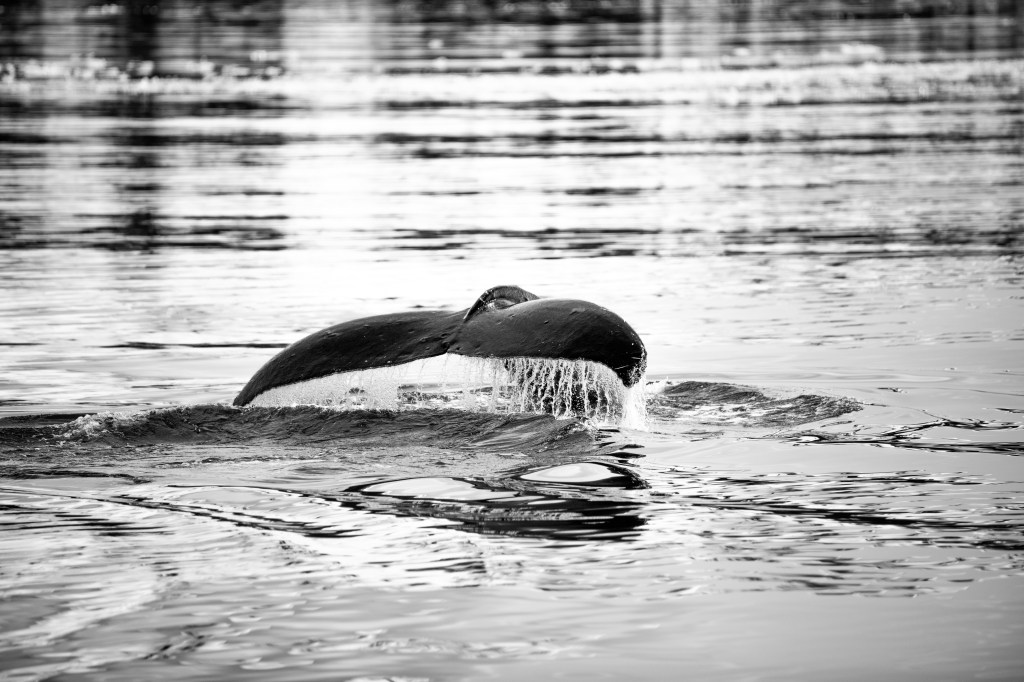
A humpback shows it’s tail before taking a deep dive in Alaska waters 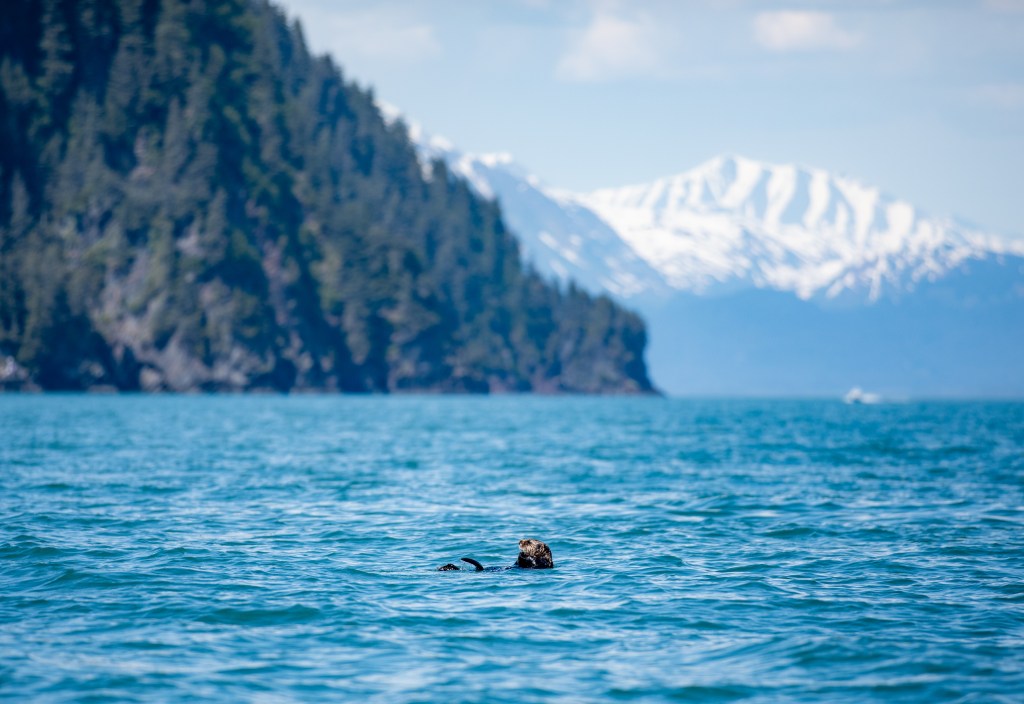
Wild northern Sea Otter in Alaska 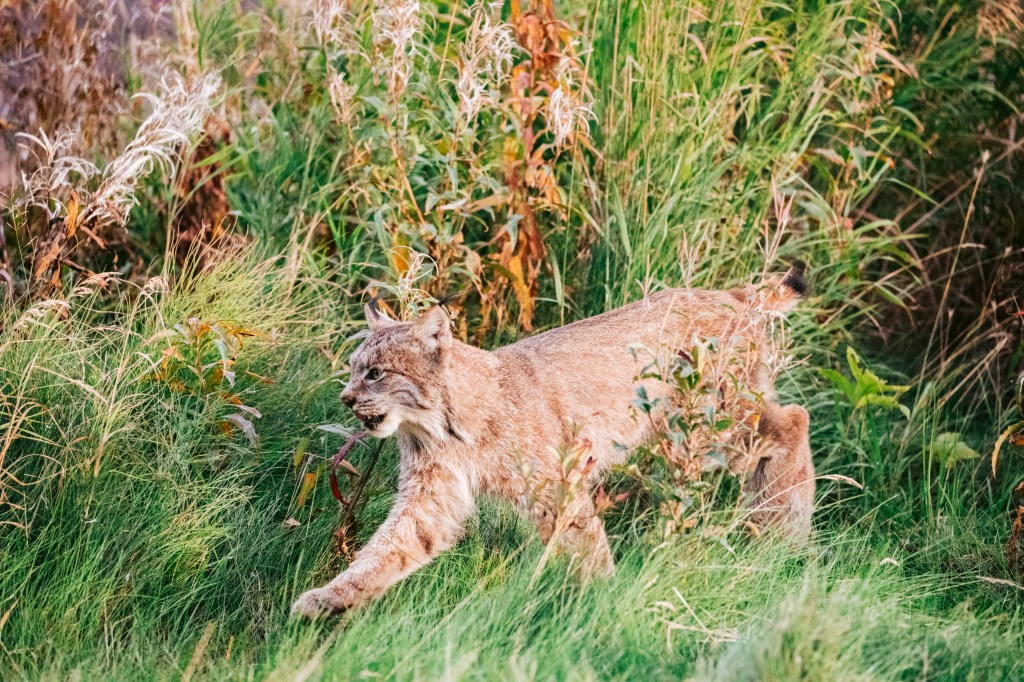
A lynx moves through the grass in Kenai National Wildlife Refuge 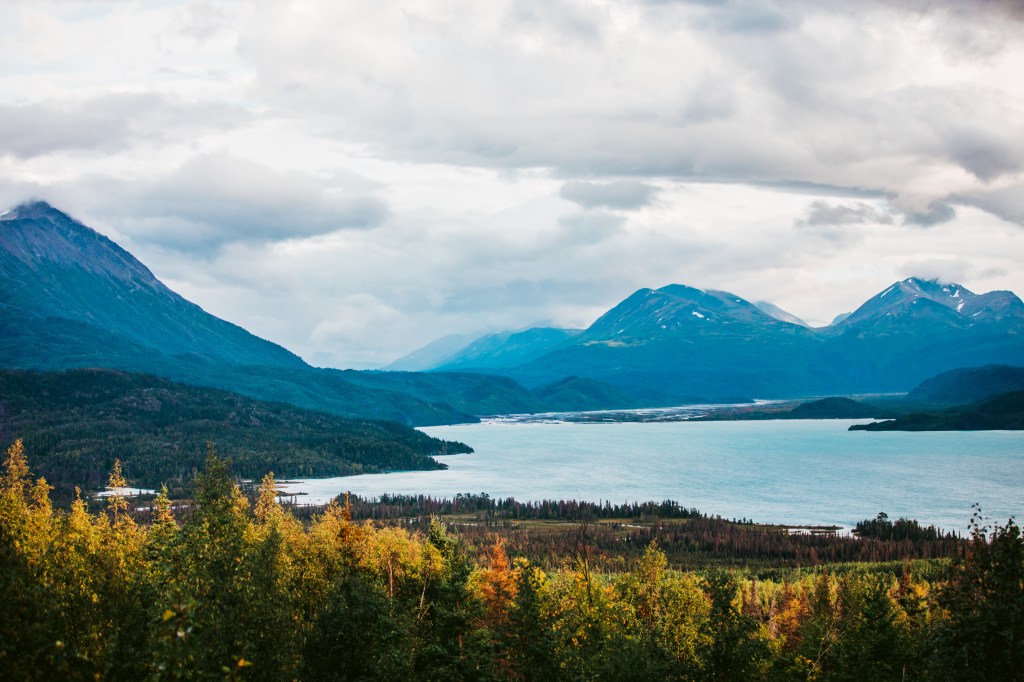
Landscape of the Kenai National Wildlife Refuge 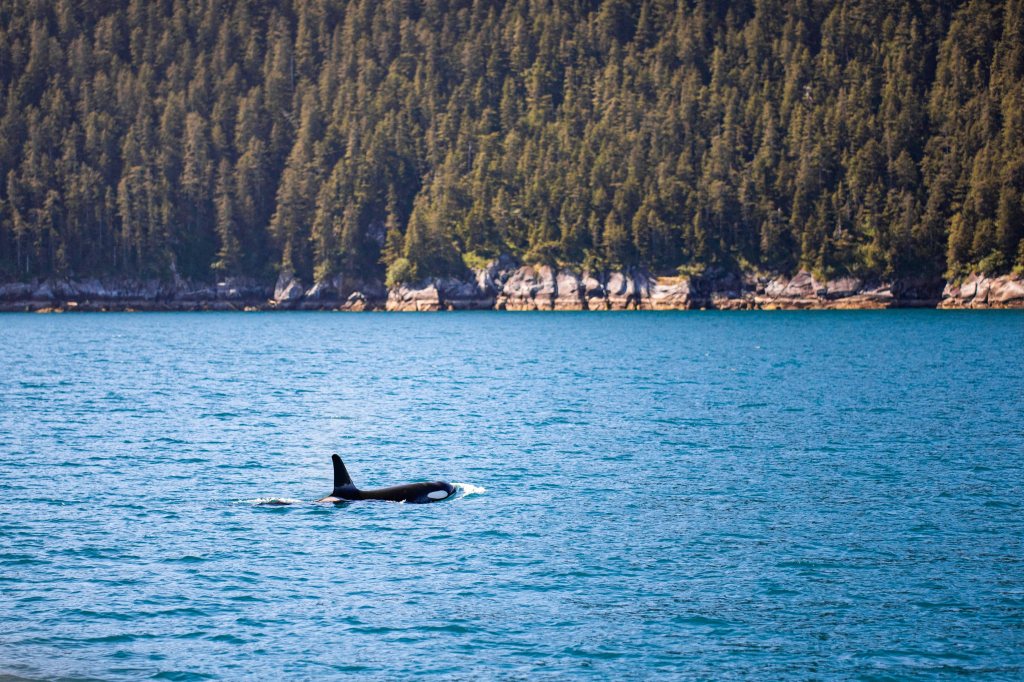
Wild orcas in Alaska 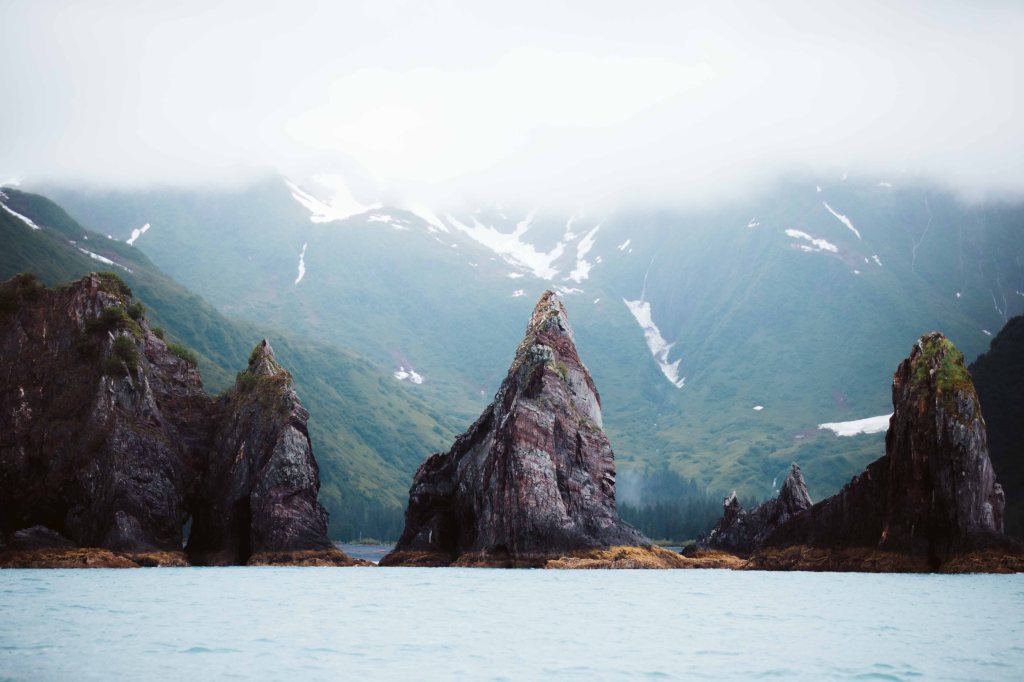
Landscape of Kenai Fjords National Park 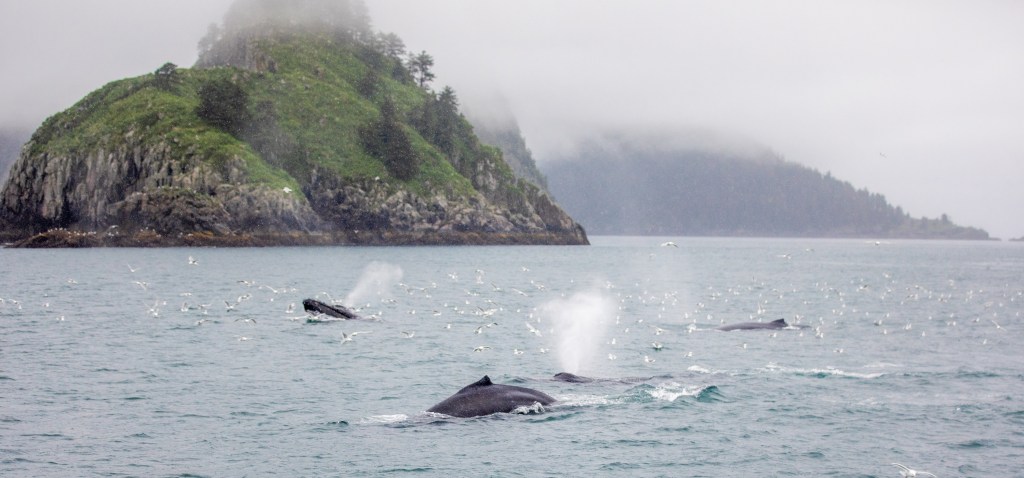
A group of humpback whales move to their next feeding location near Kenai Fjords National Park

